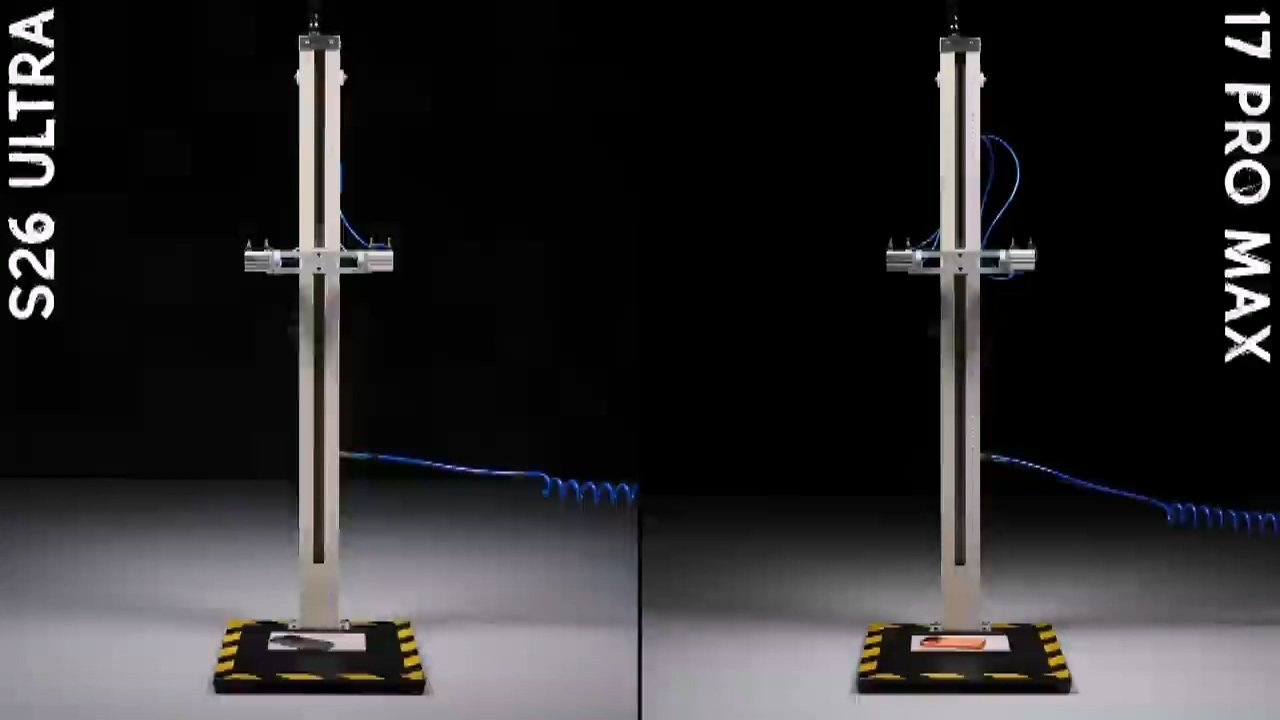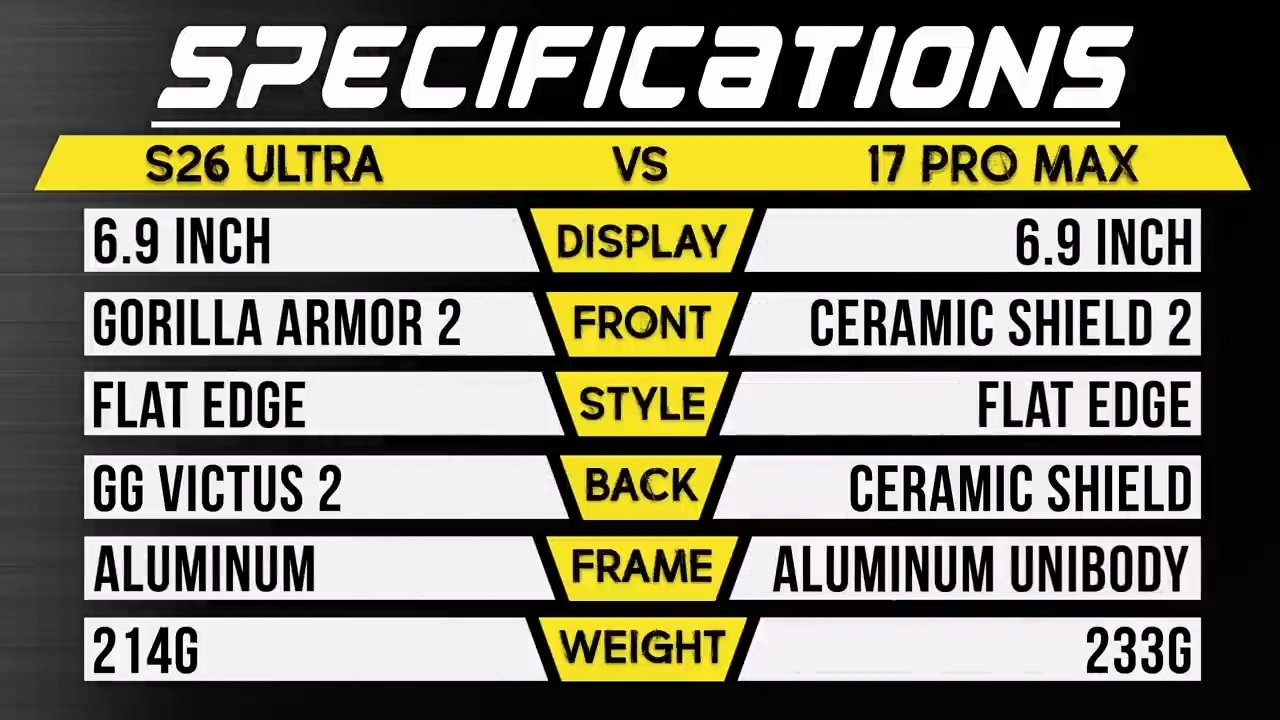
A new PhoneBuff drop test puts Apple’s iPhone 17 Pro Max and Samsung’s Galaxy S26 Ultra head to head, and the result is close. After six rounds of drops, the iPhone finished with 56 points, just ahead of the Galaxy S26 Ultra at 54.
The test started with a one-meter rear drop. Both phones cracked on the back, but the damage was worse on Samsung’s side. The Galaxy S26 Ultra took heavier impact around the telephoto camera glass, and that reportedly introduced lens flare when taking photos. By comparison, the metal section near the top of the iPhone 17 Pro Max stayed almost untouched, with more of the impact appearing to be absorbed by the lower glass area.
Corner drops and front-facing drops at the same height caused visible screen damage on both devices. The iPhone’s front camera also developed flare issues. Even so, the report says the two phones still kept their biometric systems working at that stage, so neither device lost a core unlock feature early in the test.
The bigger separation showed up once the drop height increased to 1.5 meters. After a higher rear drop, the Galaxy S26 Ultra reportedly lost fingerprint recognition entirely because its under-display sensor stopped working. The iPhone 17 Pro Max, on the other hand, kept Face ID functioning.
In the next corner drop, both phones only showed relatively minor paint wear. The most punishing round came with a 1.5-meter face-down drop. The iPhone screen ended up covered in dense spiderweb cracking, but Samsung’s telephoto module started shedding small pieces of glass, which made the damage look more severe around the camera system.
Looking at the full test, the difference wasn’t about which phone avoided cracking, because neither one did. It came down more to which flagship held onto key functions for longer. On that point, PhoneBuff gave the edge to Apple, saying the iPhone 17 Pro Max preserved its core usability a little better across the full durability run.