Privacy company Proton says Google has effectively put a price tag on nearly every US user, based on a new report that estimates how much advertisers are willing to pay to reach specific demographic profiles.
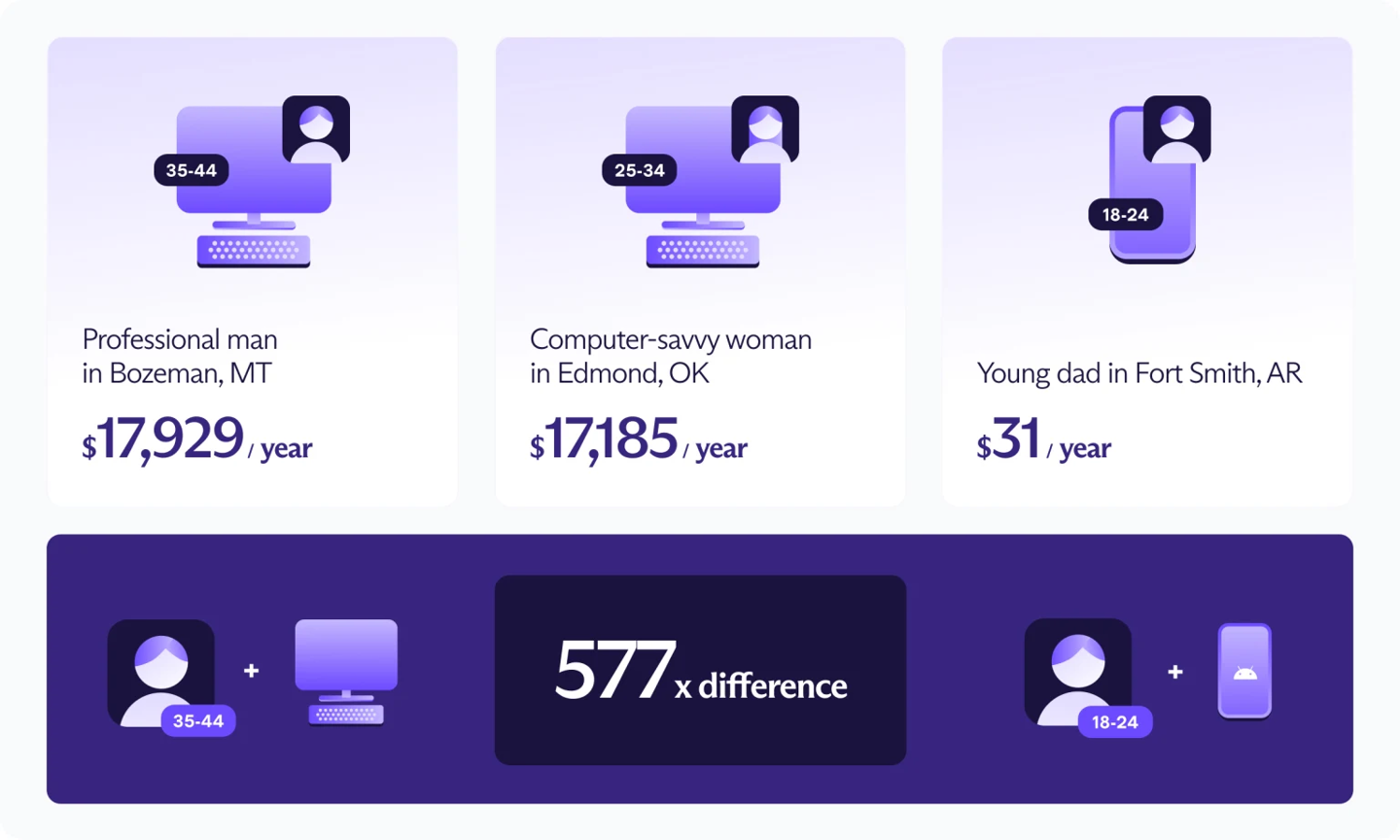
Using ad bidding data from 2025, Proton analyzed more than 54,000 demographic combinations and estimated that the average American user is worth $1,605 per year in advertising value. The spread, though, is huge. At the high end, the report says one user profile could be worth as much as $17,929.30 a year, while the low end falls to just $31.05. That creates a gap of about 577 times between the most and least valuable audiences.
The report says Google factors in search behavior, device choice, and geographic location when pricing users for advertisers. One of the highest-value profiles described in the analysis is a man between 35 and 44 living in Bozeman, Montana, who mainly uses a desktop computer to search for high-value enterprise-related content. Proton argues that local market competition and higher spending power help make that audience especially expensive to reach.

At the opposite end, the report points to a young father between 18 and 24 in Fort Smith, Arkansas, using an Android phone to search for lower-value content. That profile is estimated at roughly $31 a year. The contrast illustrates how strongly Google’s ad market appears to reward certain combinations of income signals, device usage, life stage, and location.
Device type is one of the clearest gaps in the findings. According to the report, desktop users are worth about 4.9 times as much as Android users on average, while iPhone users are worth about 2.7 times as much as Android users. Proton also says non-parents are valued around 17% higher than parents on average, and that people aged 35 to 44 sit at the top of the age-based value range, while users older than 65 fall much lower, to about $511 annually.
Proton’s broader argument is that Google turns years of search and behavior data into a monetized profile that can be sold to advertisers at different price levels. Android Headline, cited in the source article, notes that Proton directly competes with Gmail, so the company’s framing may not be neutral. Even so, the figures offer a striking look at how user behavior can be translated into measurable user data value inside the digital ad economy.