MediaTek used its Dimensity Developer Conference 2026 to outline a broader upgrade for the Dimensity StarSpeed Engine, pitching the platform as a way to deliver a more console-like mobile gaming experience on phones.
According to the company, the updated engine is built around three main areas. The first focuses on visuals through a Dimensity Ray Tracing Pipeline, which is meant to improve lighting realism and detail across devices. The second centers on responsiveness, combining low-latency LE Audio with on-device AI voice features to keep wireless audio and live voice interaction feeling faster. The third targets sustained smoothness through a mix of GPU cache optimization, frame-generation upgrades, and adaptive performance control.
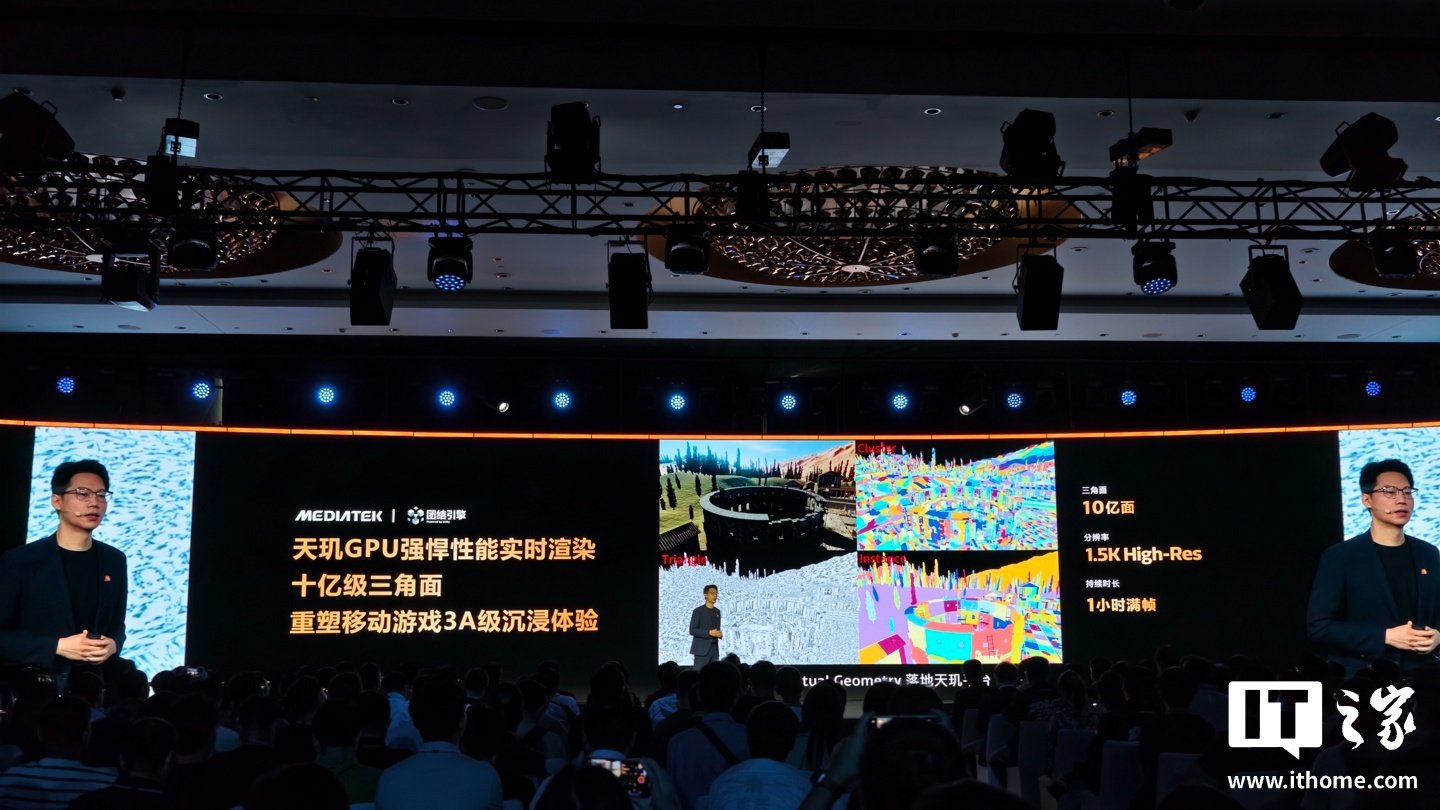
MediaTek says its ray tracing pipeline can support more advanced light and reflection effects, including off-screen spatial reflections, in an effort to bring higher-end graphics techniques to mobile titles. The company also highlighted real-time rendering capabilities aimed at heavier scenes, claiming support for billion-level triangle workloads, 1.5K high-resolution rendering, and stable full-frame operation over extended sessions.
Audio latency was another major part of the announcement. MediaTek said that with its LE Audio implementation enabled, platform-level latency can drop to as low as 32 milliseconds, while end-to-end delay can reach as low as 75 milliseconds. In its comparison figures, that represents a noticeable reduction versus both competing solutions and scenarios where the feature is not enabled.
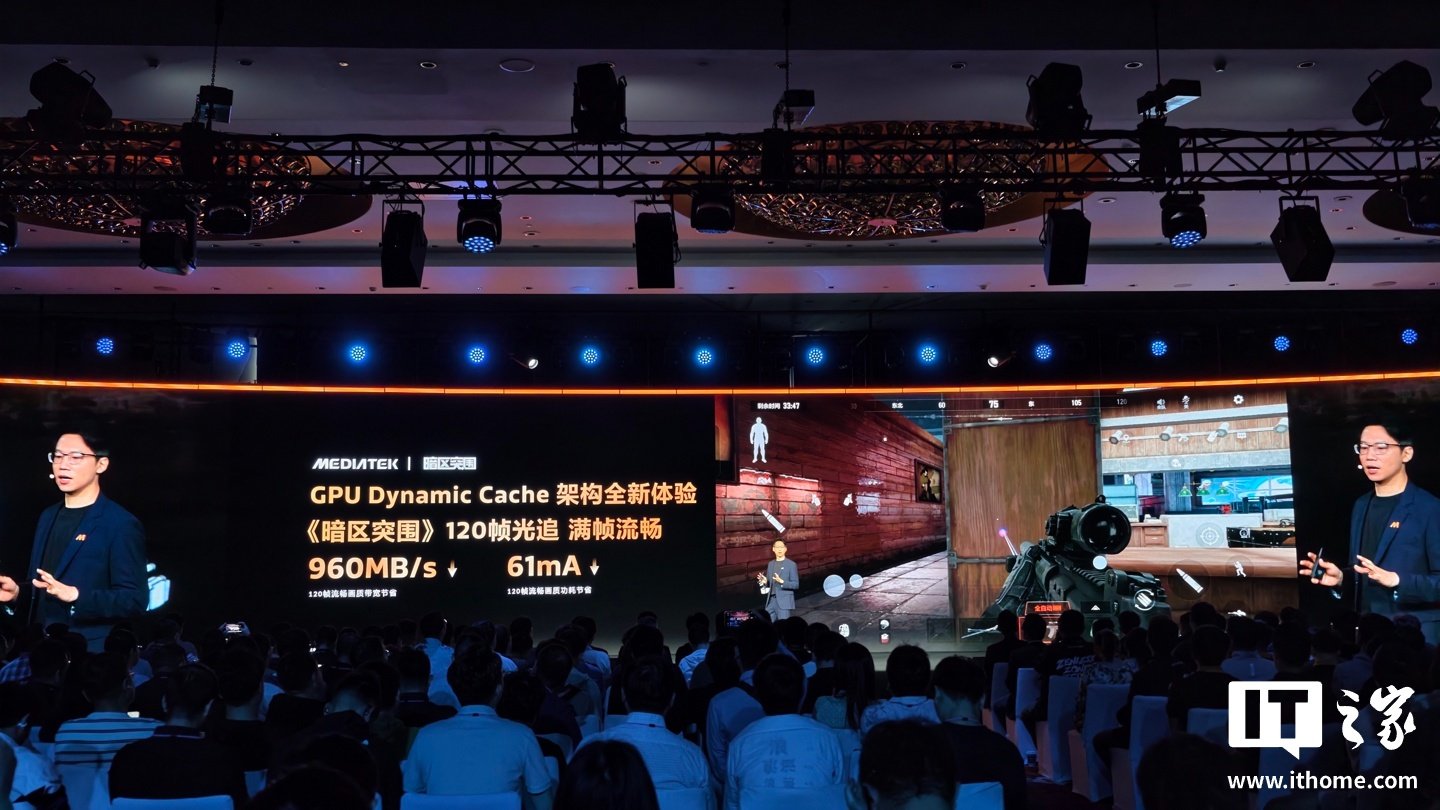
On the performance side, the company grouped several technologies under the broader smoothness story. A GPU Dynamic Cache design is intended to improve efficiency by allowing faster access to system cache resources, which should help both performance and power use. MediaTek also said this can improve the experience in demanding titles such as CrossFire: Future at 165 fps and Arena Breakout with 120 fps ray tracing enabled.
MediaTek’s frame-rate technology 3.0 was presented as a balance-of-tradeoffs upgrade rather than a raw speed push alone. In the company’s examples, Honor of Kings can be unlocked at 144 fps while reducing power consumption by 16.6%, and Arknights: Endfield can maintain 60 fps with power use cut by 43.8%.
The final piece is adaptive control technology 5.0, which is designed to predict scene changes and manage frame stability more intelligently. In Wuthering Waves, MediaTek said the system can raise 1% low frame performance by 10% while lowering power draw by 10%. In Game for Peace, it is supposed to reduce CPU and GPU load by roughly 5% to 10% in heavier gameplay scenes through real-time adjustment.
Overall, the message from the conference was clear: MediaTek wants the Dimensity StarSpeed Engine to be seen not as a single graphics feature, but as a broader stack covering visuals, audio response, frame stability, and power efficiency for modern mobile gaming.