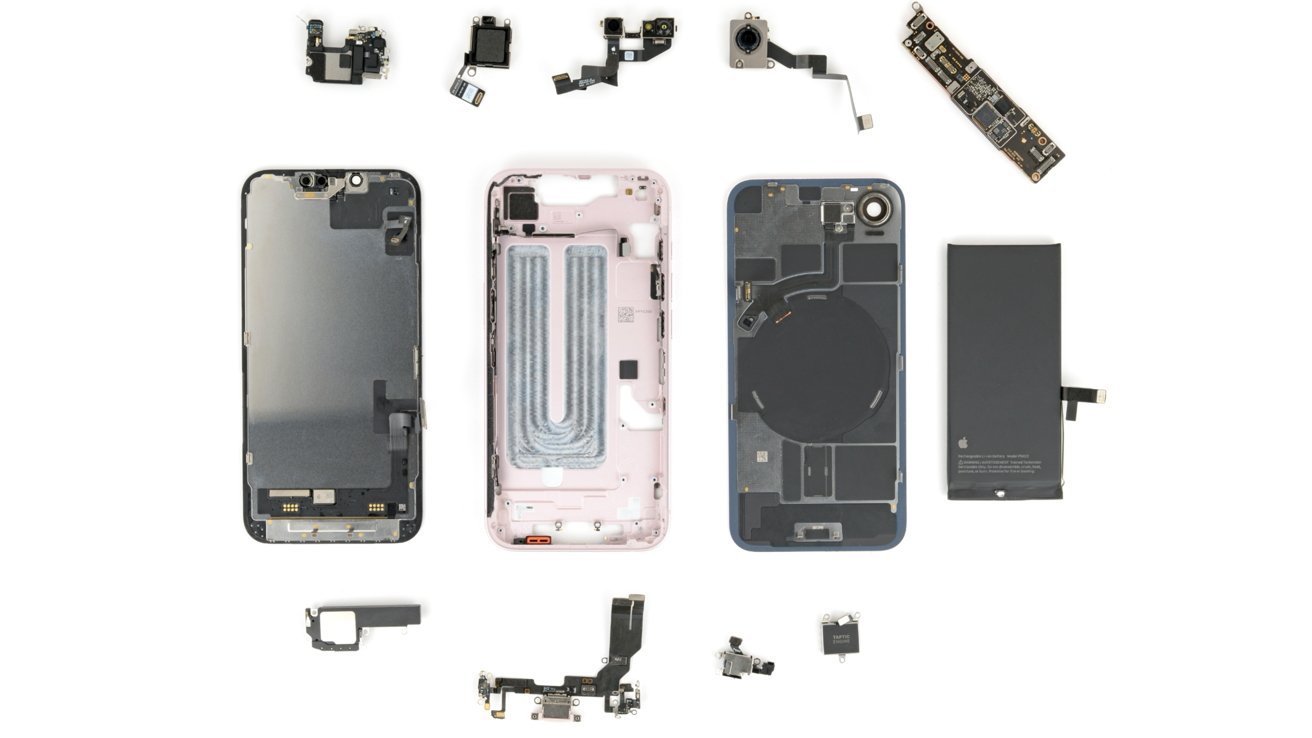
iPhone 17e has now gone through an early iFixit teardown, and the biggest takeaway is how familiar the phone looks on the inside. Based on iFixit’s findings, Apple’s new model is very close to the previous iPhone 16e in overall internal structure, with most of the big changes focused on a few upgraded core components rather than a full internal redesign.
According to the teardown process, the repair team heated the rear glass to soften the adhesive, disconnected the flex cables used for wireless charging and flash power, and then opened the device. From there, they used Apple’s standard electrically assisted adhesive-release method to remove the battery before working through the camera hardware and the rest of the internal screws and modules.
Once the logic board was exposed, iFixit confirmed that the phone uses Apple’s newer A19 chip in place of the earlier A18. The teardown also found a new C1X modem, which Apple says delivers lower power consumption while doubling data speed compared with the older version. On the inside of the back glass, the team also found the expected MagSafe ring, which means the handset supports MagSafe accessories and Qi2-compatible magnetic charging.
The report says that outside of the processor upgrade and the addition of MagSafe support, a large share of the hardware appears to remain cross-compatible with the iPhone 16e. In one of the more striking tests, the teardown team was able to install an iPhone 16e motherboard into an iPhone 17e chassis. Apple’s built-in Repair Assistant reportedly recognized and configured most of the swapped components without major trouble.
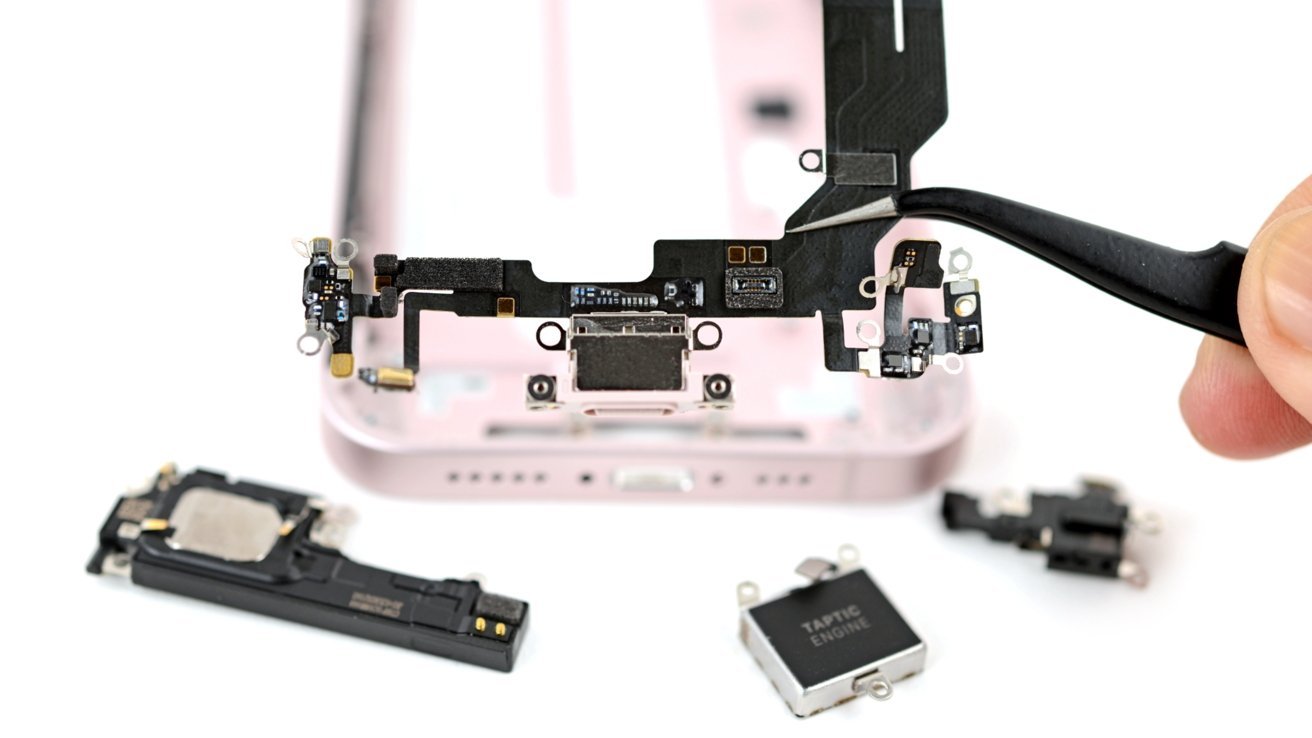
That compatibility appears to go further than expected. Even though the older iPhone 16e motherboard does not include the software support needed to identify MagSafe properly, meaning it won’t show the dedicated charging animation, the mixed-generation setup still managed to charge wirelessly. iFixit notes that more testing is still needed to confirm whether it can consistently hit the full 15W charging speed.
There is one important exception, though. When the team swapped the original TrueDepth camera modules between the two phones, basic camera functions still worked, but Face ID stopped working entirely. So while the iPhone 17e seems unusually friendly to cross-generation part reuse in several areas, biometric hardware remains much less forgiving.
Overall, the teardown paints a picture of a phone that doesn’t radically reinvent Apple’s entry-level formula. Instead, it looks like Apple kept a proven internal layout, added the A19 chip, brought in the new modem, and expanded feature support with MagSafe. For repair shops and parts-focused enthusiasts, that kind of continuity could end up being one of the model’s most practical advantages.