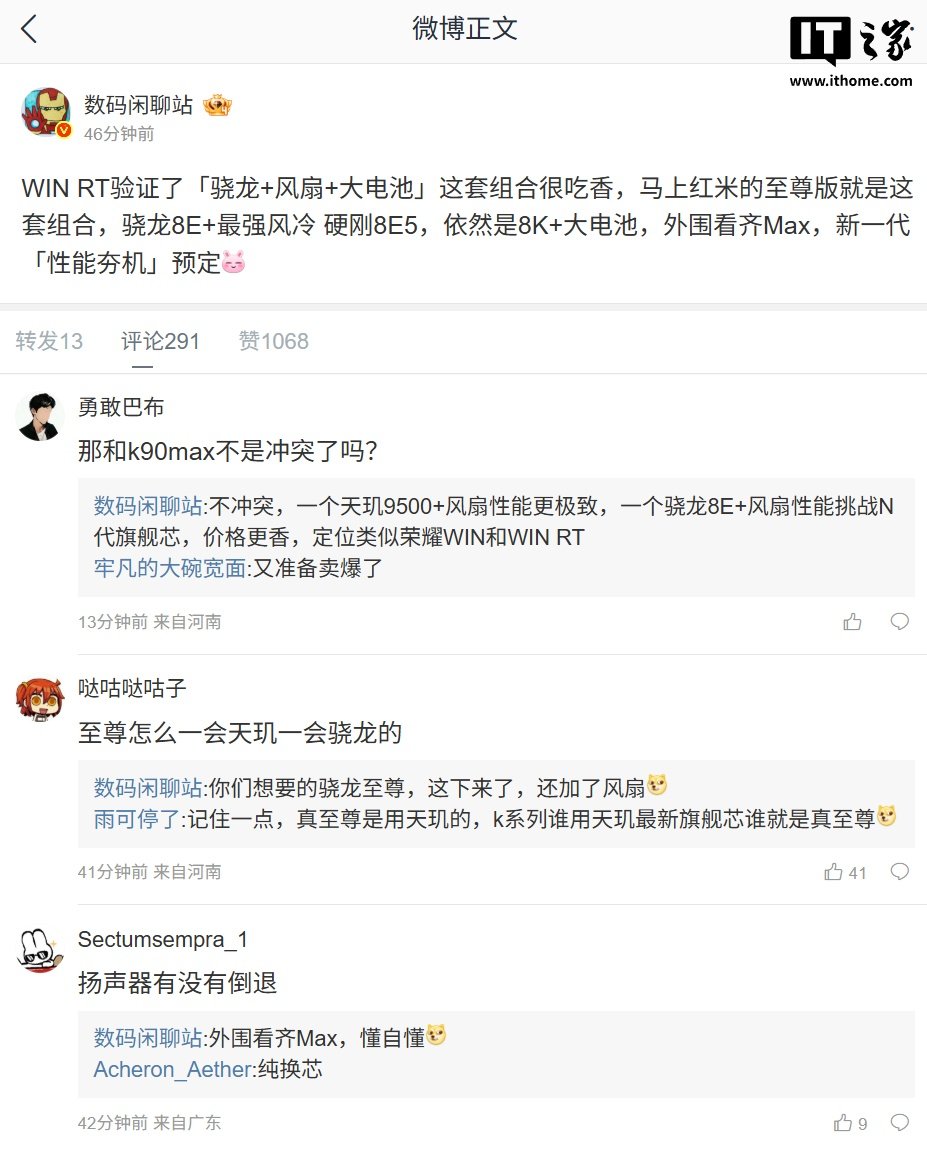
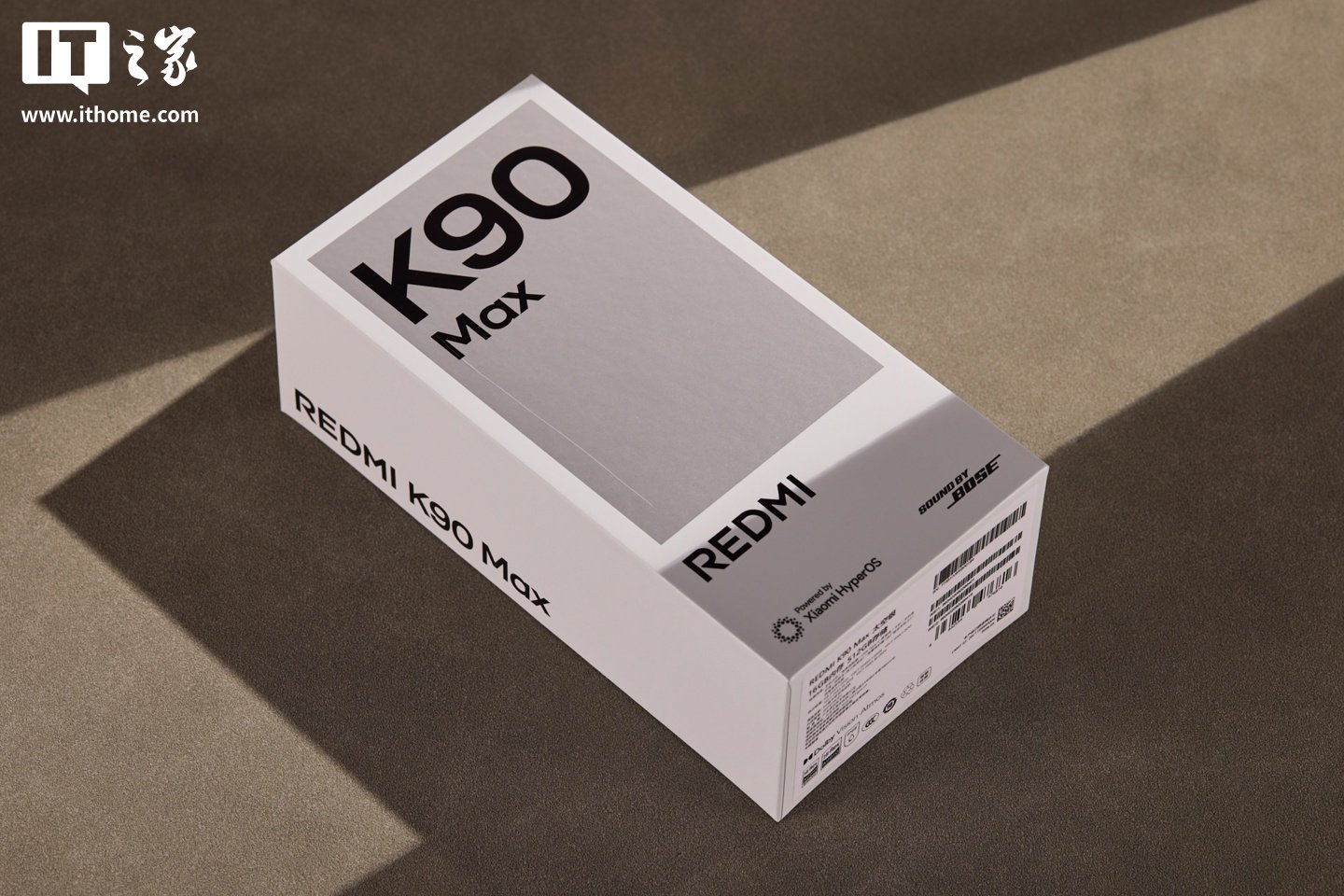
REDMI K90 Max is positioned as a gaming-focused flagship, but the bigger story here is that Redmi is trying to make a high-performance phone feel less like a niche esports device and more like an everyday flagship that happens to be extremely good at gaming. The phone pairs MediaTek’s Dimensity 9500 with an AI display chip called D2, and it’s also Xiaomi’s first phone to ship with built-in active fan cooling. That combination is meant to deliver strong frame stability, smoother high-refresh gameplay, and better thermal control under sustained load.
That approach matters because the K series has traditionally built its reputation on offering a lot of flagship hardware at more accessible prices. With the K90 Max, Redmi is clearly targeting the pain points mobile gamers complain about most: heat, throttling, battery anxiety, and the compromises that often come with gaming-centric designs. The company is pitching this as a phone that can run demanding titles at full frame rates while still feeling practical for daily use.
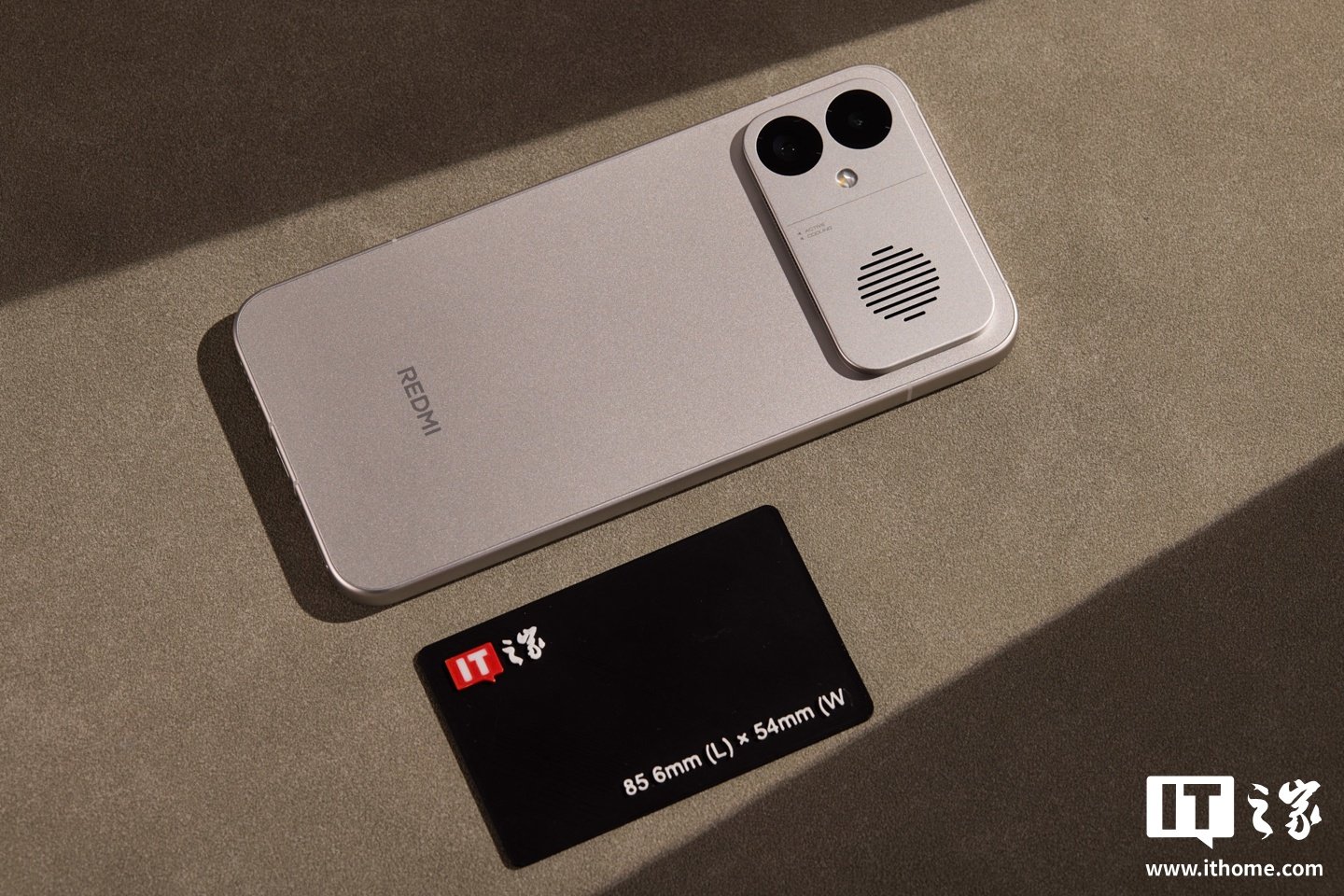
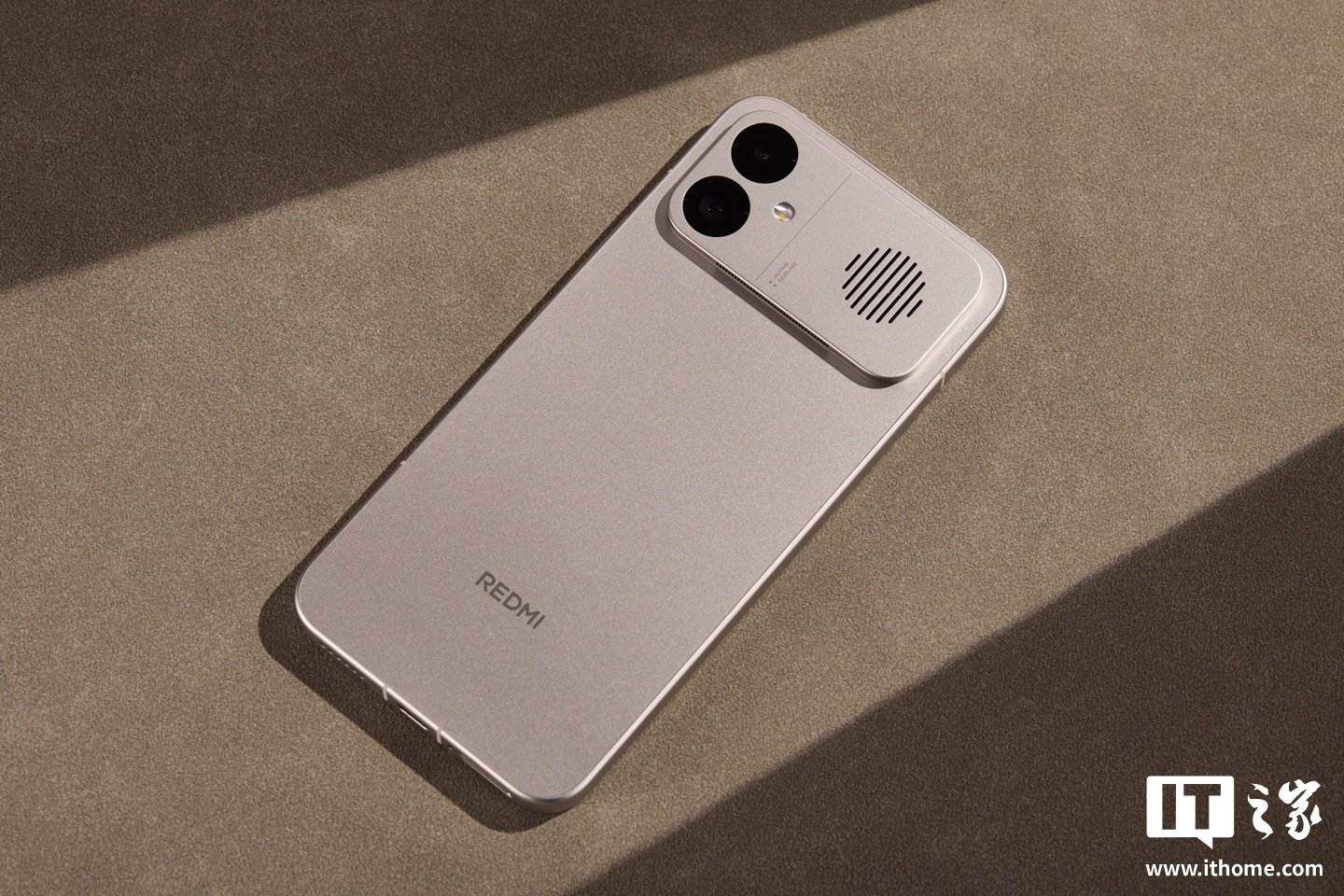
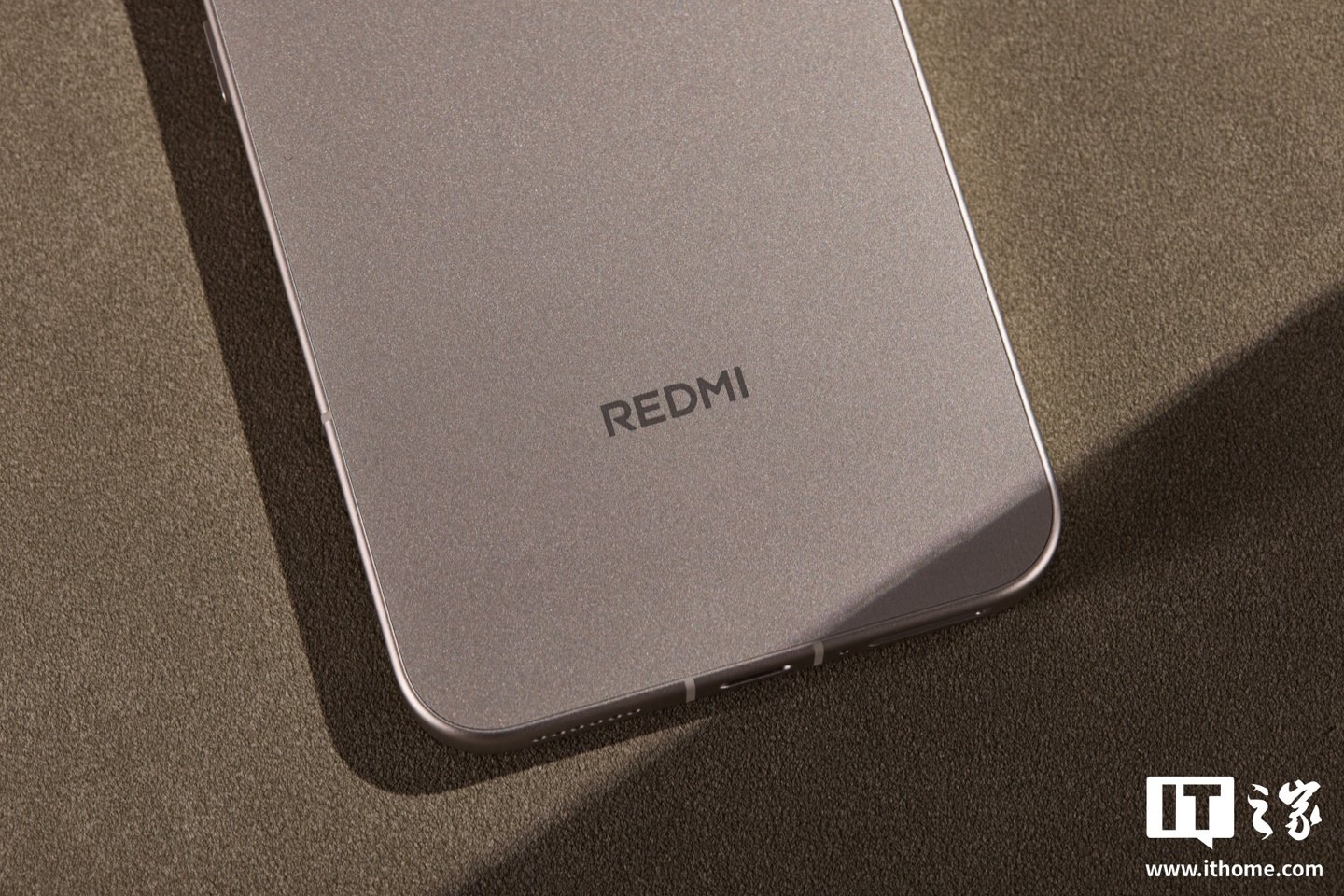
The review unit tested by IT Home was the 16GB RAM and 512GB storage version in Space Silver. Visually, it doesn’t lean into the loud, angular gaming aesthetic that many performance phones still use. Instead, the design is more restrained and mature, with a cool metallic finish, a fiberglass back panel, and a flatter, more orderly rear layout. The large metal camera-and-cooling module integrates the camera area and the fan exhaust into a single geometric block, giving the back of the phone a cleaner and more cohesive look than you might expect from a gaming model.
There are also a few practical design choices that stand out. The phone uses a 1.3mm wraparound metal frame to improve structural rigidity, and the front is built around a 6.83-inch flat display with very slim bezels and larger 10.4mm corner curves to reduce discomfort during extended landscape gaming sessions. Speaker placement is symmetrical at the top and bottom, while the side of the rear module adds a dedicated gaming microphone to help avoid muffled voice pickup when your hands cover the main mic during play.
Despite packing an internal fan and an 8550mAh battery, the phone stays reasonably controlled in size. IT Home measured it at 162.91mm by 77.93mm with an actual thickness of 8.4mm, slightly above the official 8.18mm figure, while weight came in at 229g versus the listed 227g. That still keeps it within normal flagship territory instead of pushing it into the overly bulky range. Redmi also claims full IP66, IP68, and IP69 dust and water resistance, and says the fan module itself has IPX8 and IPX9 water resistance, which is unusually ambitious for a phone with active airflow built in.
On the hardware side, REDMI K90 Max is built around the Dimensity 9500, manufactured on TSMC’s N3P process. According to the source review, MediaTek is claiming meaningful gains across CPU, GPU, and NPU performance. The chip uses an all-big-core third-generation architecture, and Redmi pairs it with LPDDR5X memory and UFS 4.1 storage, which is exactly the kind of flagship memory-and-storage stack you’d want in a performance-first device.
Synthetic benchmarks were predictably strong. In AnTuTu V11, the phone scored 3,744,547 points, including 1,058,588 for CPU and 1,413,364 for GPU. In AnTuTu’s memory test, it posted 251,174 points, with sequential read and write speeds of 4178.9 MB/s and 4283.4 MB/s respectively, while random read and write speeds came in at 2491.4 MB/s and 2206.2 MB/s. Geekbench 6 results reached 3387 in single-core and 10519 in multi-core testing. For graphics, 3DMark Steel Nomad Light produced 2535 points at an average of 18.78 FPS, and Solar Bay delivered 12309 points at 46.81 FPS, putting the rendering performance in the top tier of current Android flagships.
Where the phone gets more interesting is in game testing. With Honor of Kings set to its highest graphics settings and 144Hz mode enabled, IT Home measured an average frame rate of 143.8 FPS. The frame rate curve was described as nearly flat, with no visible stutter or drops even during more chaotic team fights. Average power draw was about 3.5W, and the hottest spot on the body, near the camera module, reached only 31.3°C. That’s an impressively cool result for this class of device.
Genshin Impact was tested at the highest graphics settings in 60 FPS mode using a 15-minute run through the Fontaine area. The average frame rate reached 59.1 FPS, with a 1% low of 33.6 FPS. The review notes that the frame line stayed stable aside from one extremely brief one-frame hitch that couldn’t be reproduced. During gameplay, the Dimensity 9500 reportedly showed balanced scheduling behavior, with most cores fluctuating in relatively modest frequency ranges instead of constantly running flat out. Average power consumption was around 4.1W, and peak body temperature was just 31.8°C, which the review credits largely to the phone’s active fan cooling system.
The most demanding test came from Honkai: Star Rail, run for 20 minutes at high resolution with all other graphics options maxed out in the Golden Hour area. Even there, the phone averaged 59.5 FPS with a 1% low of 29.7 FPS. The frame curve still showed only limited fluctuation, and IT Home said the result was better than many top-tier flagships it had previously tested. Average power draw rose to about 8.1W, but the phone still topped out at roughly 38.3°C by the end of the run. For that level of sustained power, that temperature result is a strong endorsement of the thermal design.
Fan noise also seems well controlled. In a high-speed cooling mode measured from about 30cm away, the fan reached only 34.5dBA. In practice, the reviewer said the fan was effectively inaudible during regular gaming unless the environment was extremely quiet and game audio was turned down very low. That makes the cooling system feel more usable in real life, since aggressive internal fans can easily become annoying if acoustics aren’t handled carefully.
Camera hardware is more functional than headline-grabbing, which makes sense for a device like this. The main camera uses a 50MP Light Hunter 800 sensor with a 1/1.55-inch size and an f/1.68 aperture, plus a three-axis closed-loop OIS motor to improve stability in darker scenes and video capture. There’s also an 8MP ultra-wide camera. The review found that daytime shots looked sharp and fairly natural in color, without exaggerated saturation, while low-light output stayed bright and clean enough for everyday use. The phone doesn’t include a telephoto camera, but it does offer a 2x digital crop option that apparently holds up reasonably well thanks to the main sensor’s resolution.
Battery life is another major selling point. REDMI K90 Max packs an 8550mAh battery and supports 100W wired charging. In IT Home’s mixed-use test under Wi-Fi, with the display and system volume set to 50%, Bluetooth on, balanced mode enabled, and the fan on smart adjustment, the phone lost just 8% over two hours of use. That session included 30 minutes of Genshin Impact at maximum settings, 45 minutes of 1080p high-frame-rate video playback on Bilibili, 15 minutes of Weibo browsing, 20 minutes of Douyin short videos, and 10 minutes inside the IT Home app. Finishing that test with 92% remaining suggests genuinely exceptional endurance.
Charging performance was also solid for such a large battery. Using the included 100W charger in the phone’s fast charging mode with the screen off, the device reached 23% in 10 minutes, 40% in 20 minutes, and 55% in 30 minutes. A full charge from 0% to 100% took 67 minutes. That’s not ultra-fast by smaller-battery standards, but for an 8550mAh cell, it’s a very respectable result and should still make quick top-ups practical.
Pricing is aggressive as well. The reported first-sale prices are 2,999 yuan for 12GB + 256GB, 3,499 yuan for both 16GB + 256GB and 12GB + 512GB, 3,999 yuan for 16GB + 512GB, and 4,699 yuan for 16GB + 1TB, with lower figures available through China’s subsidy pricing. The review especially calls out the 16GB + 256GB, 12GB + 512GB, and 16GB + 512GB versions as particularly competitive in the 3,000-yuan price band.
Overall, the source review argues that REDMI K90 Max avoids the usual one-dimensional gaming-phone trap. It delivers high frame rates, strong thermal control, and very long battery life, but it does so in a cleaner industrial design that feels easier to live with day to day. If Redmi’s goal was to build a gaming flagship that doesn’t look or behave like a niche device, this phone seems to get surprisingly close.