Huawei has introduced its iNCR atomic base station as part of a small-site indoor coverage solution developed with Hubei Mobile, positioning it as a quicker and simpler way to fix weak signal zones in places where traditional deployment is slow, messy, or too expensive for the scale of the site.
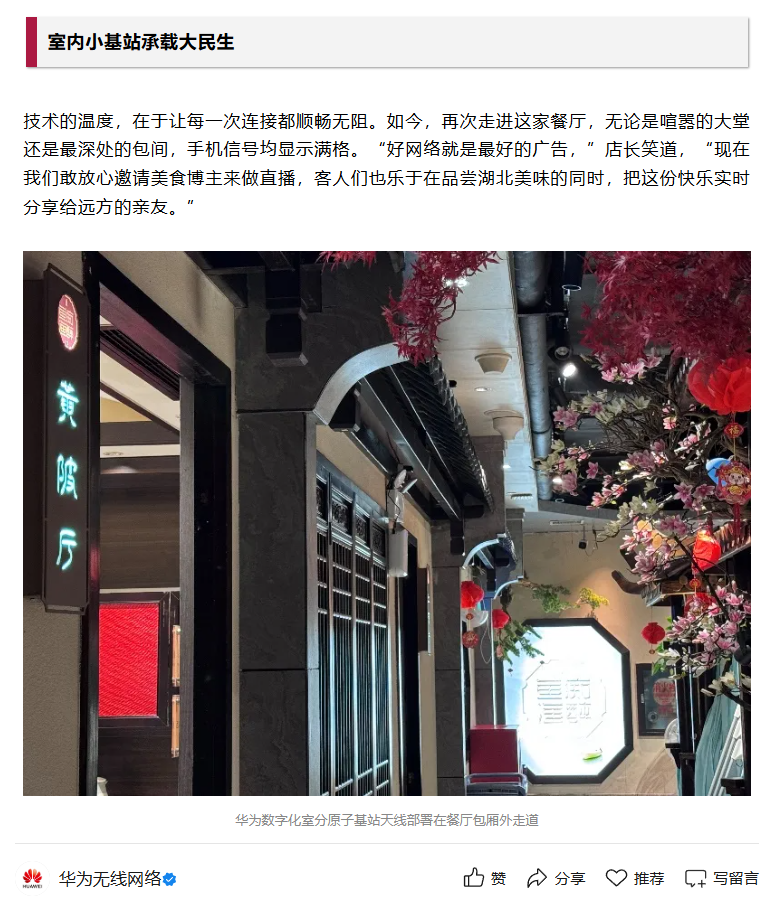
The company says the system was recently used in a large restaurant in Wuhan that covers more than 2,200 square meters and stretches over 50 meters deep. Because the venue includes many private rooms and thick walls, it had become a classic indoor dead zone. After the indoor coverage upgrade, Huawei says the site reached full signal coverage.
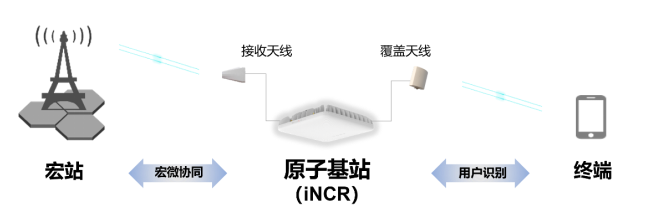
According to the company, the iNCR atomic base station is designed around three main advantages. The first is deployment simplicity. The unit is roughly palm-sized, supports plug-and-play installation, uses wireless transmission, doesn’t require fiber, nearby and remote equipment pairs, or even SIM card configuration. Huawei says a single deployment point that used to take around three days with traditional solutions can now be completed in as little as three hours. In the restaurant case, engineers reportedly finished the installation in half a day without interrupting normal business.
The second advantage is reliability and energy efficiency. Huawei says the hardware has gone through full lifecycle validation and that its ten-year bad-part rate is as low as two-thousandths, less than 1% of the rate seen in conventional repeaters. It also says the unit can coordinate intelligently with macro base stations to improve energy savings and support greener operation.
The third point is cost performance. Huawei says the solution is more affordable than traditional repeater deployments while still delivering much stronger capacity and easier maintenance. The company argues that the value goes beyond restaurants, since elevators and underground parking structures are still major signal blind spots across China. Industry data cited by Huawei says more than 3 million elevators and over 60,000 underground parking areas still need better coverage, making indoor coverage a much broader infrastructure problem than a single pilot project.