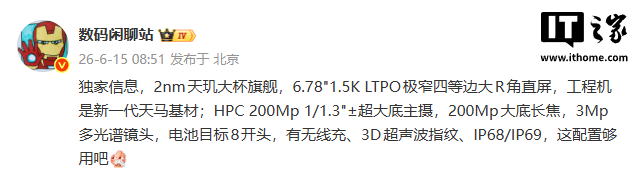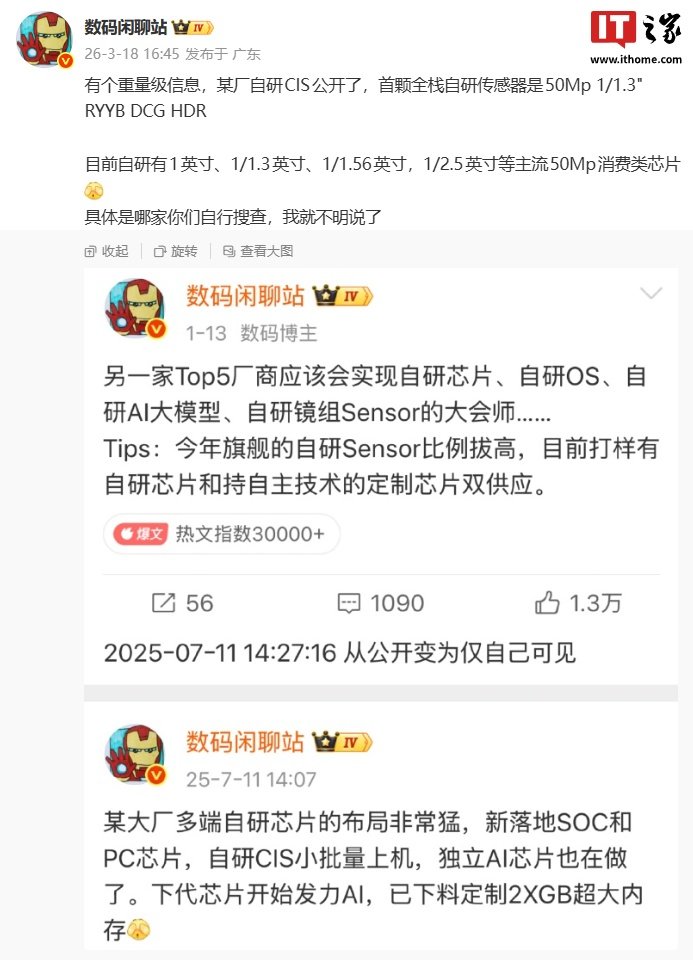
A new leak out of China suggests Huawei may have quietly shown off a major piece of its imaging roadmap: an in-house camera sensor built with domestic manufacturing and full-stack internal development. The claim comes from tipster Digital Chat Station, who described the news as a heavyweight update and pointed to a first self-developed part built around a 50-megapixel 1/1.3-inch RYYB sensor with DCG HDR support.
According to the post cited by IT Home, the company’s internal sensor work doesn’t stop there. The leak says development has already covered several mainstream 50-megapixel formats, including 1-inch, 1/1.3-inch, 1/1.56-inch, and 1/2.5-inch chips. If accurate, that would mean the effort is aimed at a full consumer imaging lineup rather than a single showcase component.
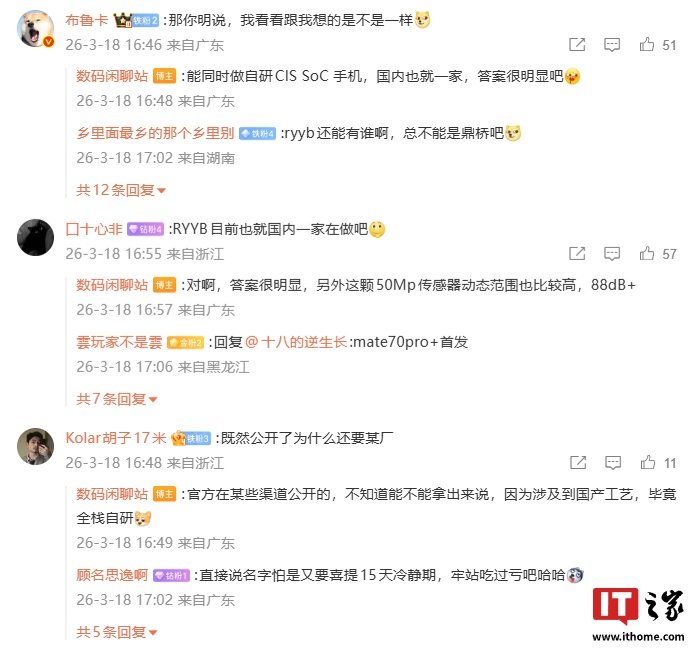
The original post didn’t name Huawei outright, but commenters quickly focused on that possibility because of the repeated hints, the mention of RYYB sensor technology, and the broader context around self-developed mobile components. The tipster also reportedly responded that there’s basically only one domestic brand capable of simultaneously building its own CIS, SoC, and smartphone platform, which made the intended target seem fairly obvious.
One reason the phrasing remained indirect may be the manufacturing angle. The tipster said the information had been disclosed through official channels in some settings, but still sounded cautious about discussing it too openly because it touches on domestic production processes and a fully self-developed stack. That part gives the rumor a broader industry angle beyond just another spec leak.
IT Home also pointed back to an earlier January comment from the same source, which said a top-five brand was on track to bring together self-developed chips, its own operating system, its own large AI model, and self-developed lens or sensor technology. At the time, some readers guessed companies like OPPO or vivo. Based on the newer clues, the report now leans strongly toward Huawei.
If this turns out to be accurate, the significance isn’t just about one more camera sensor entering the market. It would suggest Huawei is trying to tighten control over one of the most important parts of modern smartphone imaging, from sensor design to system-level integration. For a brand that already leans heavily on camera performance as part of its flagship identity, that could become a meaningful strategic move.
There’s still no formal product announcement attached to the claim, so it should be treated as a leak rather than a confirmed roadmap item. Still, between the sensor sizes mentioned, the emphasis on domestic manufacturing, and the repeated references to a full in-house stack, this rumor points to a much bigger ambition than a one-off imaging experiment.