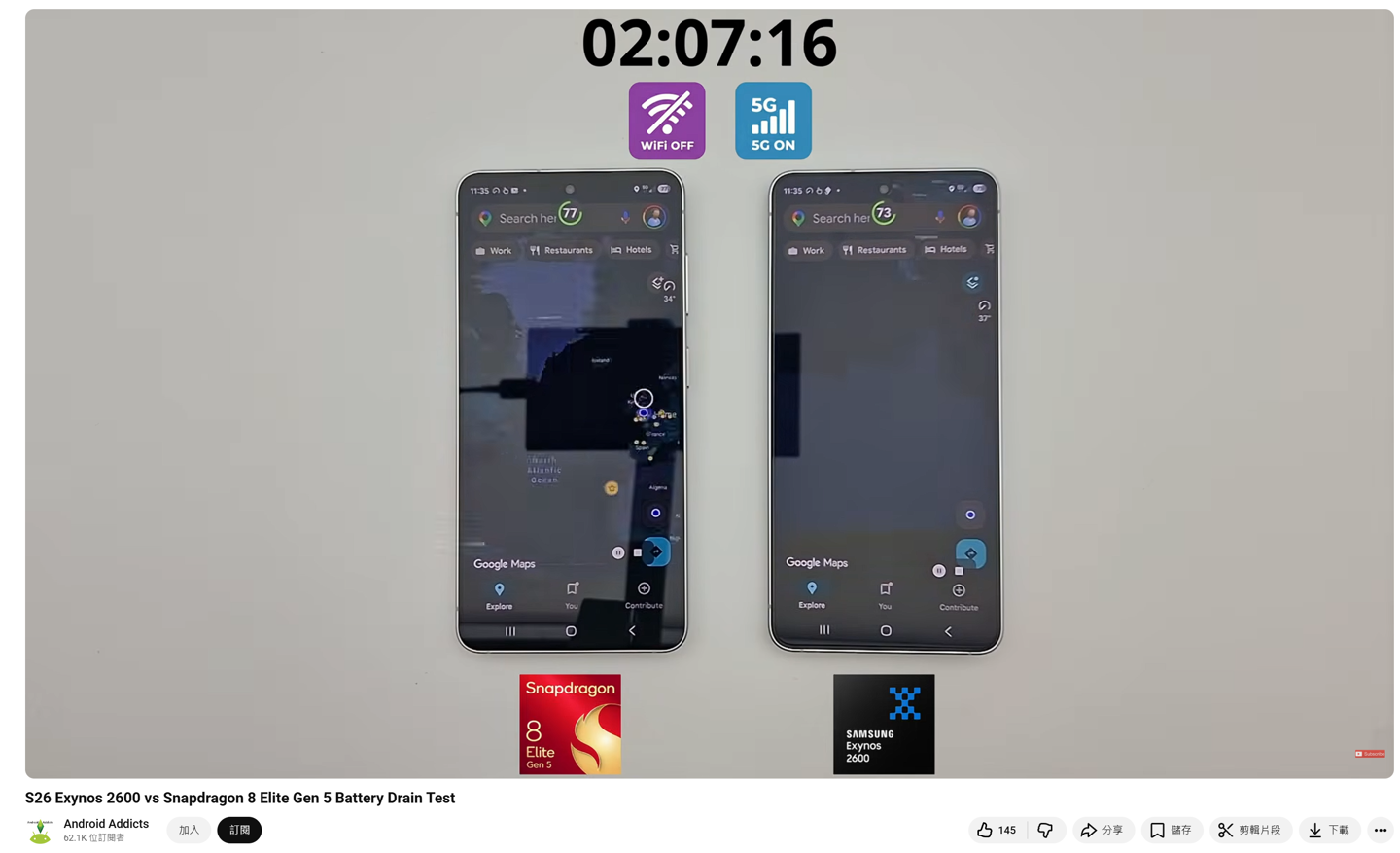
A new hands-on battery comparison suggests Samsung may still face a meaningful efficiency gap between its two expected Galaxy S26 chip options. In a video shared by YouTuber Android Addicts, two versions of the Galaxy S26 were tested side by side, one powered by Exynos 2600 and the other by Qualcomm’s Snapdragon 8 Elite Gen 5.
The test was designed to push both phones through a long mix of real-world and stress-heavy tasks over 5G with Wi-Fi turned off. According to the report, the sequence included phone calls, 4K 30fps video recording, video encoding, Google Maps, WhatsApp video calls, YouTube playback, 3DMark benchmarking, TikTok scrolling, browsing on X, Prime Video, and Instagram, with both devices running until they shut down.
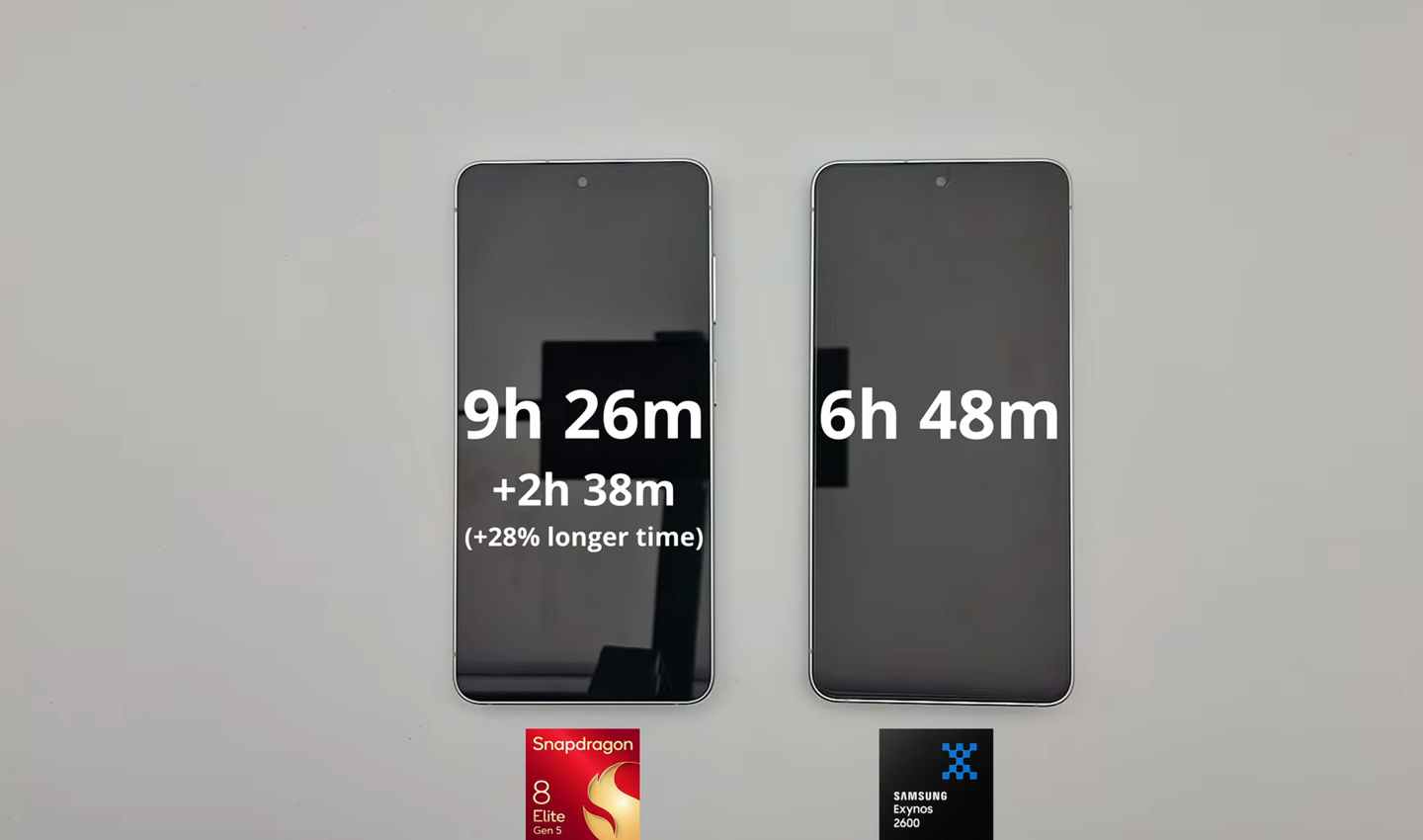
At the end of that run, the Snapdragon 8 Elite Gen 5 version reportedly lasted 9 hours and 26 minutes. The Exynos 2600 version was said to power off at 6 hours and 48 minutes. That leaves Qualcomm’s model ahead by 2 hours and 38 minutes, which is a very large gap for two versions of the same phone.
The report also noted a thermal problem during the Exynos model’s video-encoding stage. The phone apparently overheated badly enough that the task crashed before it could finish. That kind of instability would naturally hurt battery life as well, since excess heat and failed heavy workloads usually go hand in hand.
If the result reflects the behavior of the final hardware, it could raise bigger questions than battery endurance alone. A large efficiency deficit can affect gaming performance, sustained camera workloads, charging heat, and long-session responsiveness, especially in a premium phone where buyers expect consistent flagship behavior.
Of course, this is still one third-party test rather than Samsung’s own final benchmark guidance, so it shouldn’t be treated as the last word. Even so, the reported gap is large enough to draw attention, and it may renew debate around whether Samsung’s 2nm GAA process and 10-core CPU strategy are delivering the real-world efficiency gains people expected.