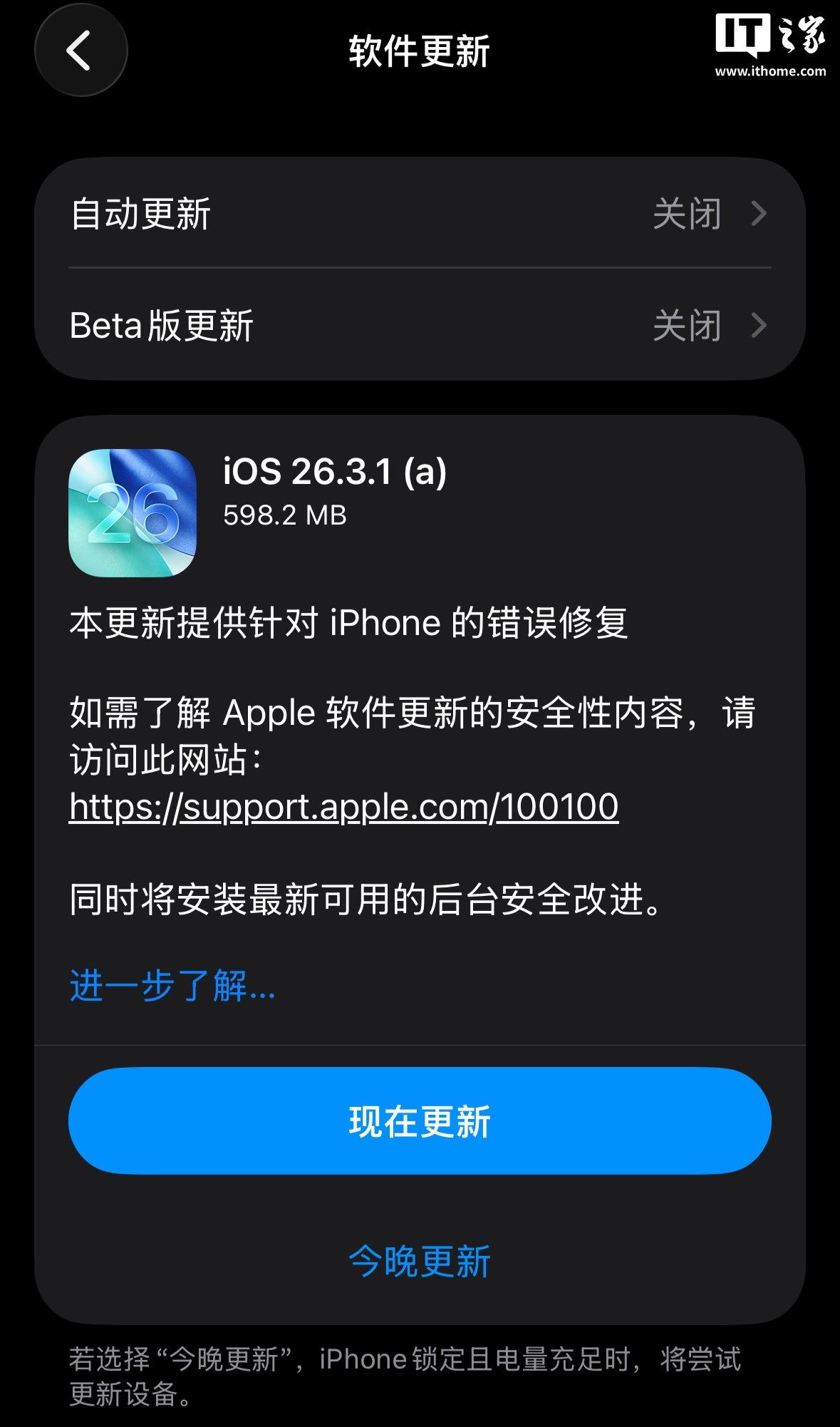
Apple has released a new round of background security updates for iOS 26.3.1, iPadOS 26.3.1, macOS 26.3.1, and macOS 26.3.2, with the patch focused on a high-risk Safari vulnerability tracked as CVE-2026-20643. The company pushed the fix on March 17 through its lightweight background update system rather than waiting for a full operating system release.
According to the details cited by IT Home, the update applies to four builds: iOS 26.3.1 (a), iPadOS 26.3.1 (a), macOS 26.3.1 (a), and macOS 26.3.2 (a). The report notes that macOS 26 currently has two branches in circulation, with one tied to the MacBook Neo line and another used by other Macs running macOS 26 Tahoe.
The security issue sits inside WebKit, the browser engine underneath Safari. Apple says the bug stems from a cross-origin problem involving the Navigation API. To close the hole, the company improved input validation so malicious web content can’t break through key browser security boundaries as easily.
That matters because the affected weakness touches the same-origin policy, one of the web’s core protections. In practical terms, if a flaw like this is successfully exploited, a malicious site may be able to access data that should stay isolated, including cookies, stored site data, and active login sessions from other websites. That’s why Apple is treating the fix as a high-priority Safari vulnerability patch instead of rolling it into a slower, broader system update cycle.
Apple hasn’t said whether CVE-2026-20643 has already been used in real-world attacks. So there’s no public confirmation of active exploitation at this point, but the company’s decision to ship the patch through background delivery suggests it wanted to get the mitigation out quickly.
The broader point here is how Apple is using its background security mechanism. Rather than making users wait for a full firmware upgrade, the company can send smaller protective updates directly to supported devices. That gives it a way to respond faster when a WebKit issue affects a large part of the Apple ecosystem at once.
Users who want to check whether the update is present can open the Settings app on an iPhone, iPad, or Mac, then head into Privacy & Security and look for the Background Security Improvements section. Apple says that area also lets users review, manage, and even remove these smaller security updates.
For anyone running the affected releases, the takeaway is straightforward: Apple has already shipped the fix, and it addresses a browser-level issue serious enough to potentially weaken cross-site protections. Even without confirmed in-the-wild abuse, this is the kind of update that makes sense to leave enabled and install promptly.