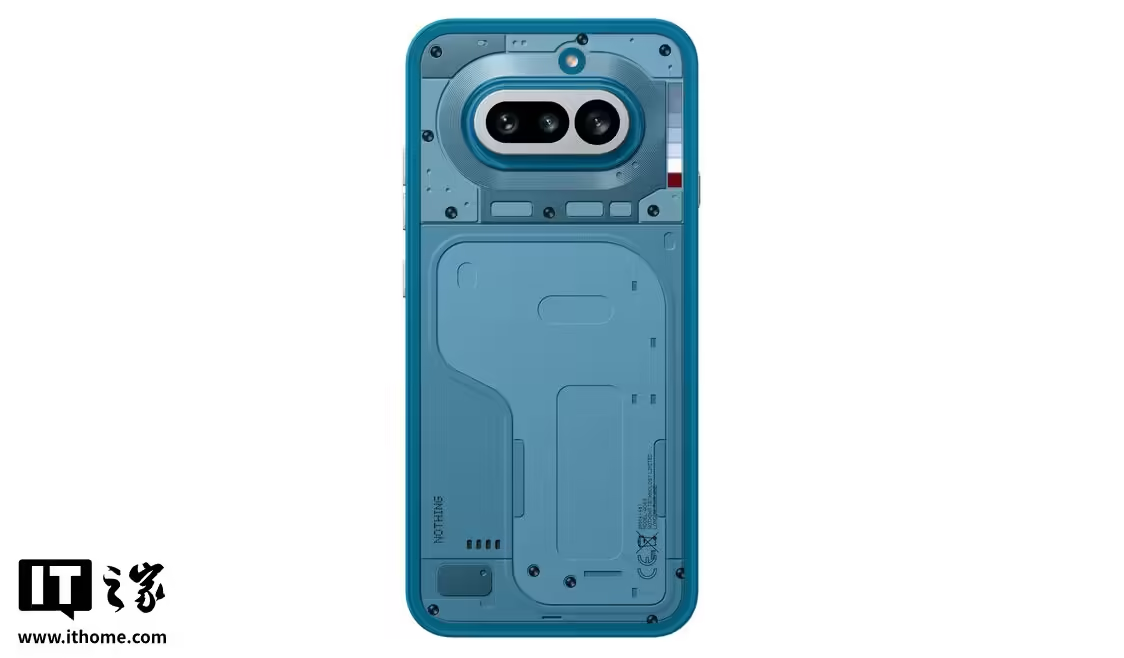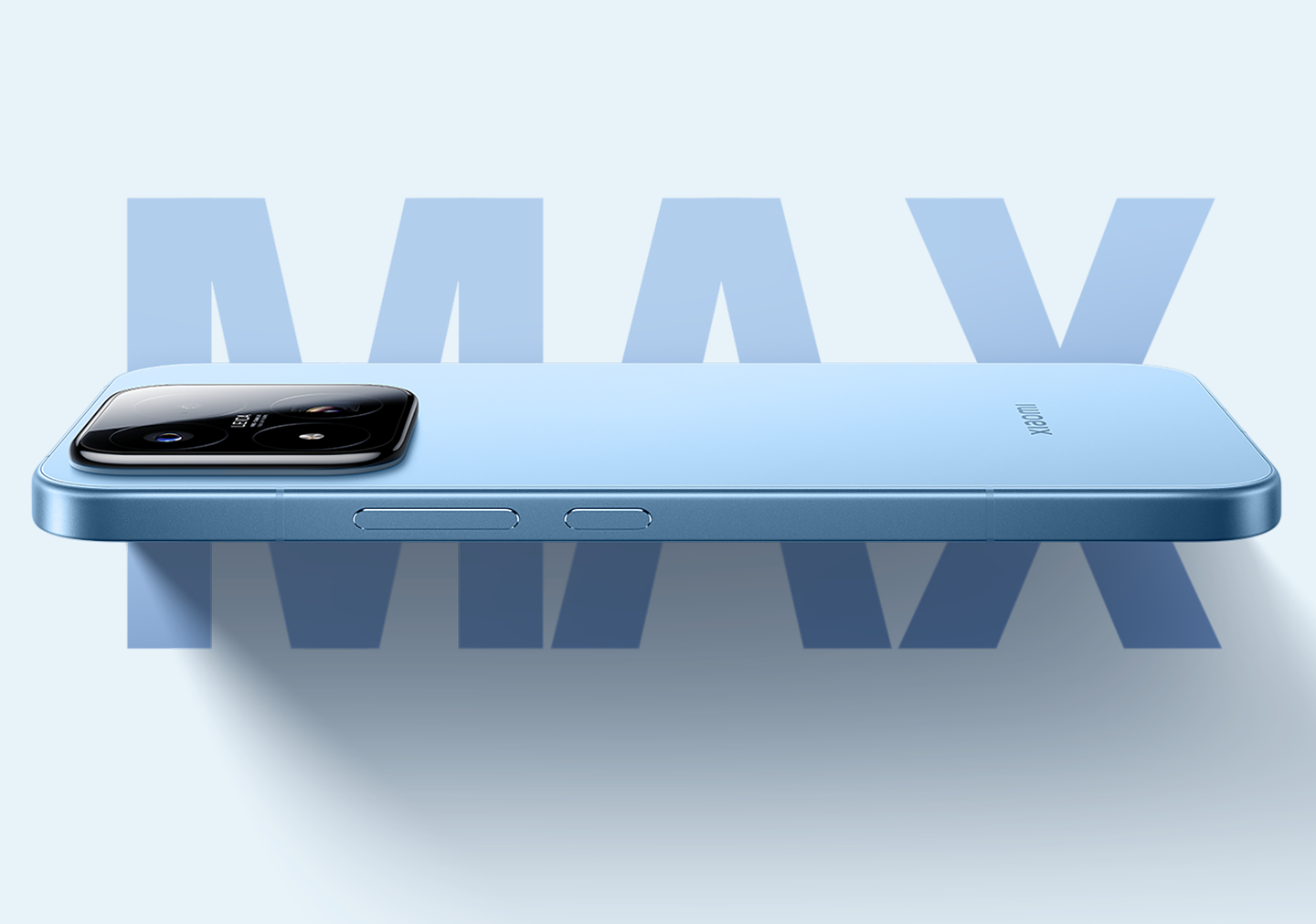
Big phones never really disappeared, but truly oversized handsets have been hard to find in recent years. That may be starting to change. As Xiaomi officially introduced the Xiaomi 17 Max on May 13, the announcement also revived a broader conversation in China’s phone market: are giant-screen phones finally ready to return?

Xiaomi is clearly leaning into that idea. The company positions the 17 Max as a model meant to redefine what a large standard flagship can be, promising major upgrades in imaging, battery life, screen quality, and performance. Its 6.9-inch display already puts it at the top end of today’s mainstream phone sizes, even if some users still argue that a phone only really counts as oversized once it crosses the 7-inch line.
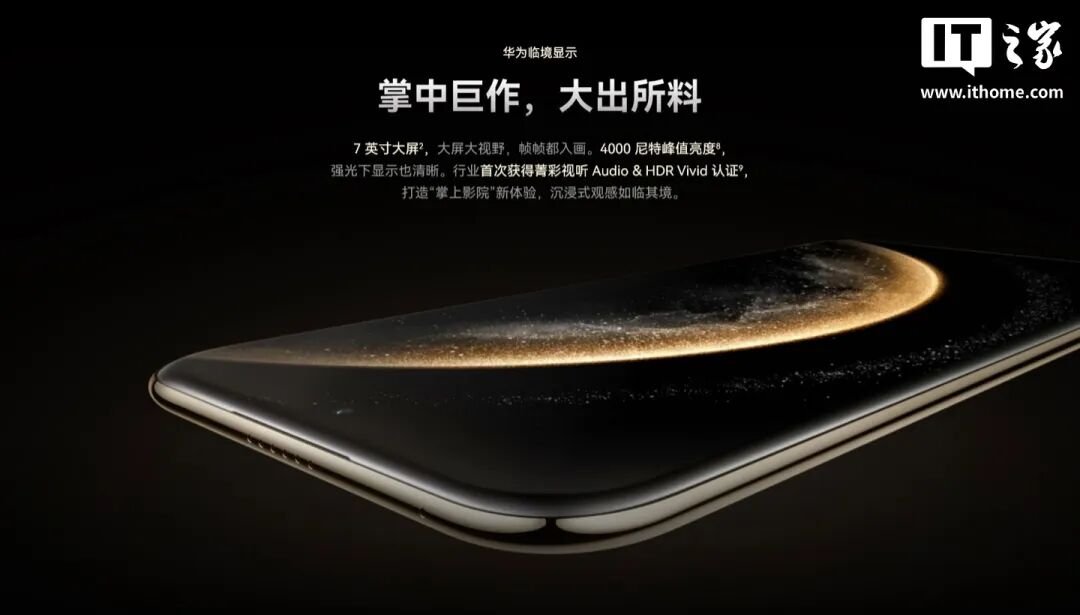
That distinction matters because phones around 7 inches have become rare. In the straight-slab market, devices that get close to that size have mostly been older models, with Huawei’s Mate 70 Air standing out as one of the few recent examples at 6.96 inches. For a while, that made the category feel almost dormant.

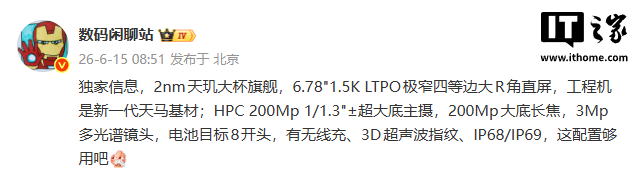
Now, multiple leaks suggest the segment could be active again in the second half of 2026. According to the discussion summarized by IT Home, at least two manufacturers are evaluating or already preparing true 7-inch smartphone products. One is said to be Huawei, which may bring a mid-range large-screen model with a 1.5K LTPS high-refresh panel, a Kirin 8-series chip, and a bigger battery. Xiaomi is also reportedly preparing a 7-inch-class device under the Redmi line, with a 2K display, a 3nm chip, a battery above 10,000mAh, a metal frame, ultrasonic fingerprint recognition, and IP68/IP69 water resistance.
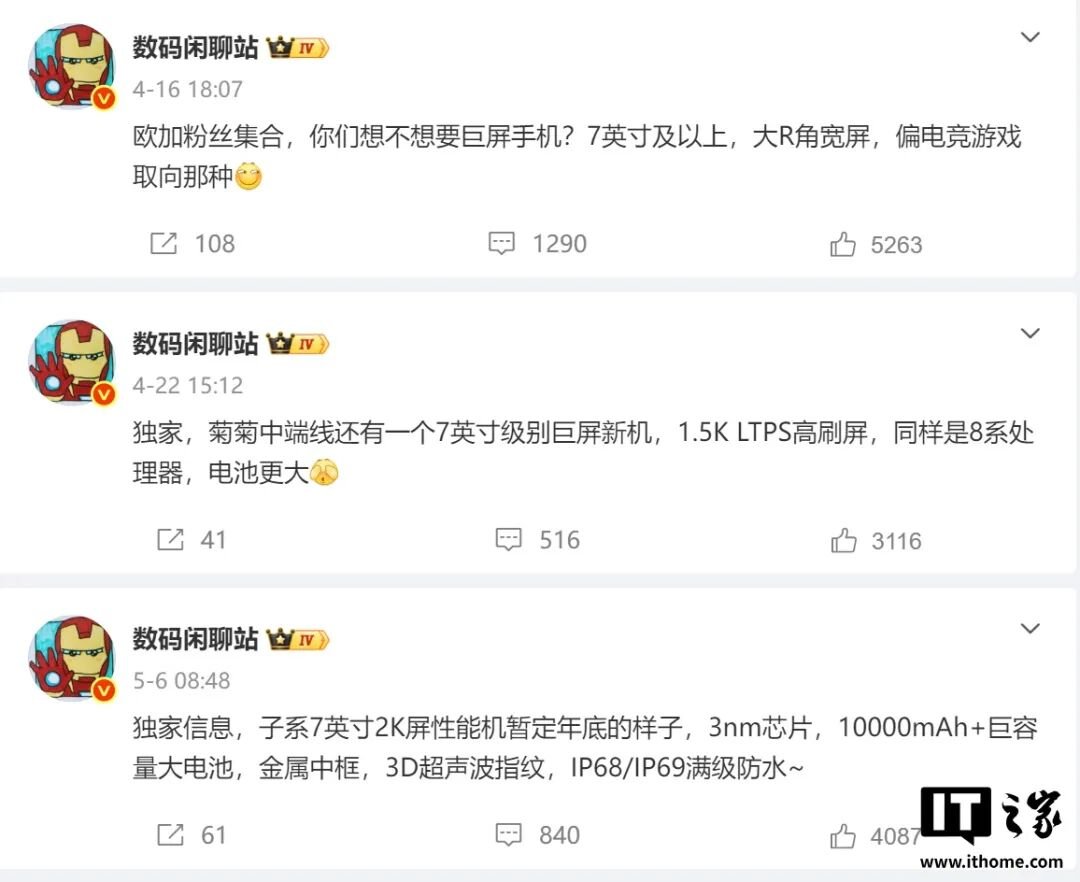
The report also says OPPO and OnePlus-related teams may be exploring phones that reach or exceed the 7-inch mark, with a stronger gaming focus. If that holds true, the market could see at least two fresh giant-screen launches later this year, giving a neglected category some real momentum again.
There are practical reasons why brands keep revisiting the idea. The most obvious advantage is immersion. A larger panel gives movies, games, reading, and browsing more visual breathing room, and that can make the overall experience feel richer. A bigger chassis also gives phone makers more internal room for larger batteries, stronger cooling systems, and more ambitious camera hardware.
Still, the tradeoffs haven’t gone away. A very wide phone is harder to use with one hand, and once the body width goes past 8 centimeters, everyday reachability can become a problem. Portability is the other issue. A larger phone can be awkward in pockets, heavier in daily use, and less comfortable for people who prioritize convenience over screen space.
That’s why the category remains a balancing act between immersion and practicality. You gain a more theater-like viewing experience, but you give up some handling comfort. The good news for manufacturers is that advances in battery density, component integration, and industrial design mean a modern 7-inch smartphone doesn’t have to feel as brick-like as oversized phones once did.
There’s also an interesting reality check in the numbers. The jump from 6.9 inches to 7 inches sounds dramatic, but on a diagonal basis the difference is only 0.1 inch, or about 2.5 millimeters. In actual display area terms, that works out to only a modest increase. So while a 7-inch label may feel more exciting in marketing terms, the real-world visual and ergonomic difference between 6.9 and 7 inches may not be huge.
At the same time, the market for smaller phones may be shifting too. IT Home notes that compact flagship models should still be plentiful in the next product cycle, but some engineering prototypes are reportedly getting a little larger, moving above 6.4 inches. One reason may be the ongoing push to pack in bigger batteries and periscope telephoto hardware without sacrificing too much endurance or performance.
In that context, the return of giant-screen phones doesn’t look like a random one-off. It looks more like a response to changing user priorities: people want strong battery life, better cooling, bigger displays, and fewer compromises, even if that means carrying a larger device. Whether the category fully rebounds will depend on real sales, but after years on the sidelines, large-format phones suddenly look relevant again.