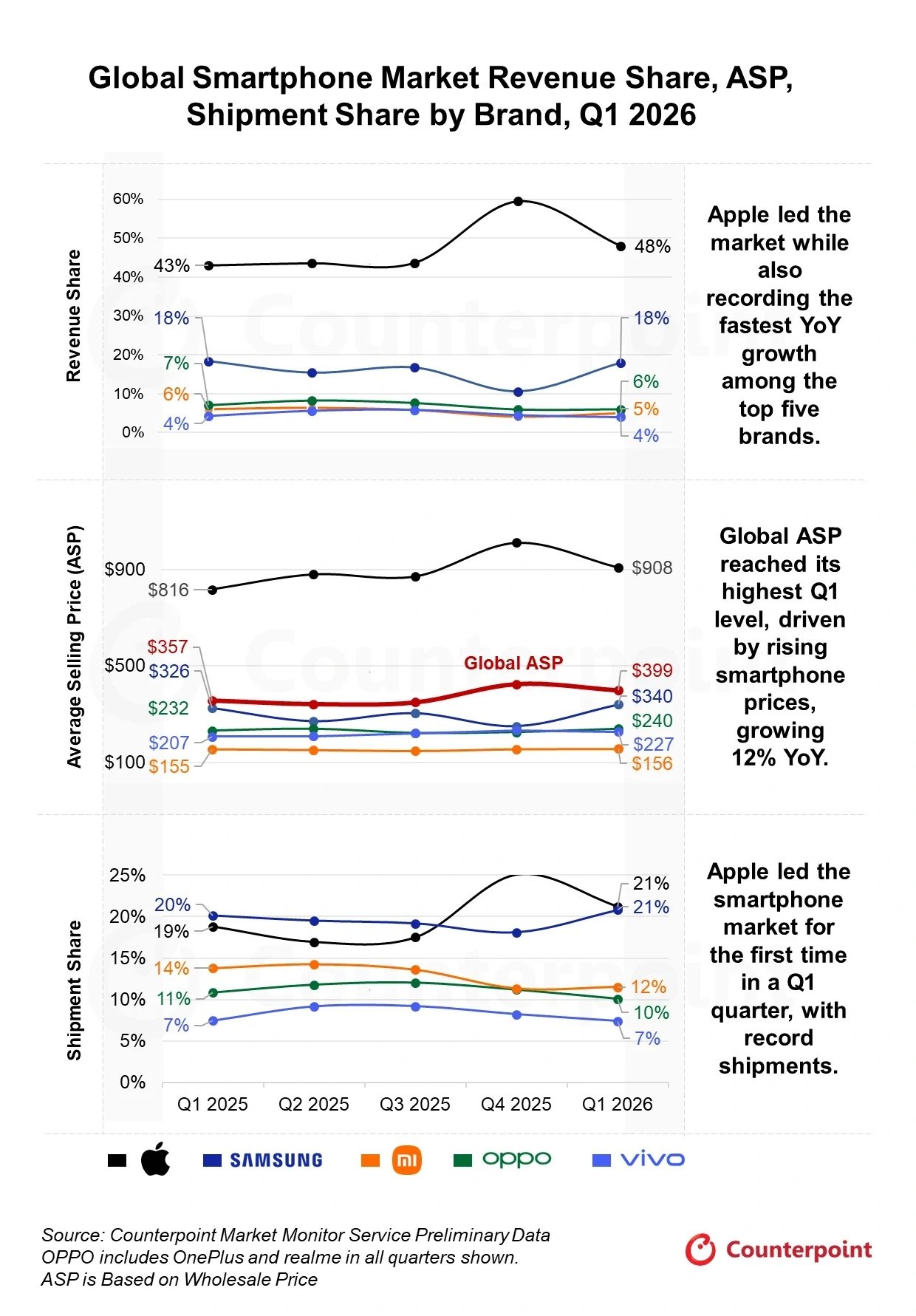
Apple captured 48% of global smartphone revenue in the first quarter of 2026, according to a new report from Counterpoint Research. The market research firm said total worldwide smartphone revenue reached $117 billion during the quarter, up 8% year over year, with Apple holding a commanding lead over every other major brand.
Counterpoint attributes much of that strength to continued demand for the iPhone 17 and iPhone 17 Pro Max. The firm says Apple managed to keep pricing relatively stable even as component costs rose, which helped push average selling prices up 11% from a year earlier.
The report also argues that Apple was in a better position than many rivals to absorb supply-side pressure during the ongoing memory shortage. That resilience appears to have strengthened the company’s position during the quarter, especially across parts of the Asia-Pacific region where subsidies, promotions, and trade-in programs helped lift sales.
Samsung remained the No. 2 player in both revenue and shipments. While its shipments were flat year over year, its average selling price increased 4%, which was enough to support a 4% revenue gain in the quarter.
Xiaomi moved in the opposite direction. Counterpoint says the company’s shipments fell 19% year over year, while revenue dropped 18%. Because Xiaomi has heavier exposure to entry-level and midrange segments, the brand appears to have been hit harder by the memory crunch in most regions outside Latin America.
The report adds that DRAM shortages are affecting the smartphone industry more broadly. Apple CEO Tim Cook said during the company’s fiscal Q2 2026 earnings call that Apple’s DRAM inventory was being consumed gradually. If that pressure continues, it could eventually create pricing pressure around the iPhone 18 later this year.
Viewed in that context, Q1 2026 wasn’t just another strong quarter for Apple. It also highlighted how much pricing power and supply-chain flexibility can matter when the wider smartphone market is dealing with cost inflation and component constraints.