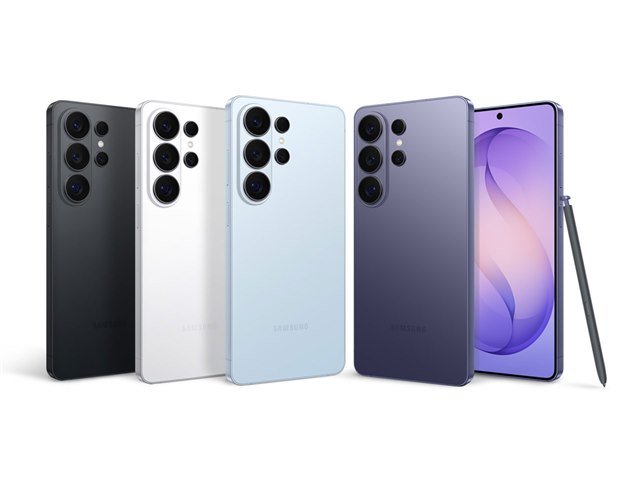
According to a report by South Korean media outlet Sisa Journal-e on May 30, Samsung Electronics is researching the possibility of introducing a liquid cooling system into its Galaxy series smartphones, aiming to reduce overheating and improve overall performance.
Industry sources indicate that Samsung has assembled a dedicated active cooling research team within its Production Technology Research Institute. The team is independently developing active cooling technologies including liquid cooling and air cooling, with plans to apply them to future Galaxy smartphones.
Liquid cooling works by circulating liquid to dissipate heat, while air cooling uses a small internal fan to draw in outside air and cool the device’s surface. The advantage of air cooling is rapid temperature reduction, but it comes with drawbacks such as increased weight and fan noise.
Due to waterproofing structural limitations, heat generated by smartphone processors generally cannot be channeled directly into a liquid cooling module. As a result, most current solutions adopt a two-stage approach: air cooling as the first stage, with liquid cooling assisting as the second stage, balancing performance with structural constraints.
Some phone manufacturers have already adopted combined liquid + air cooling solutions. For instance, Chinese brand Nubia has launched gaming phones equipped with both built-in fans and liquid cooling systems. Similarly, OPPO and vivo (specifically iQOO) have also released gaming phone models with built-in mini cooling fans.
Senior researcher Park Min of Samsung’s Production Technology Research Institute stated: “Our research direction is to adopt liquid cooling alone. Solutions that use fans to assist liquid cooling will ultimately still face noise-related limitations, so we have decided to focus purely on liquid cooling.”
With the rising performance demands of on-device AI and mobile gaming, smartphone thermal management has become a major area of industry research. Samsung faced controversy in 2022 when its Game Optimization Service throttled performance to control heat on the Galaxy S22 series.
“Smartphone processors and power modules all experience performance degradation as temperatures rise,” Park Min added. “There is a close relationship between temperature and performance, and high temperatures are also a major cause of electronic device failures. Apple has begun filing active cooling system patents, and I believe commercial adoption is not far off.”