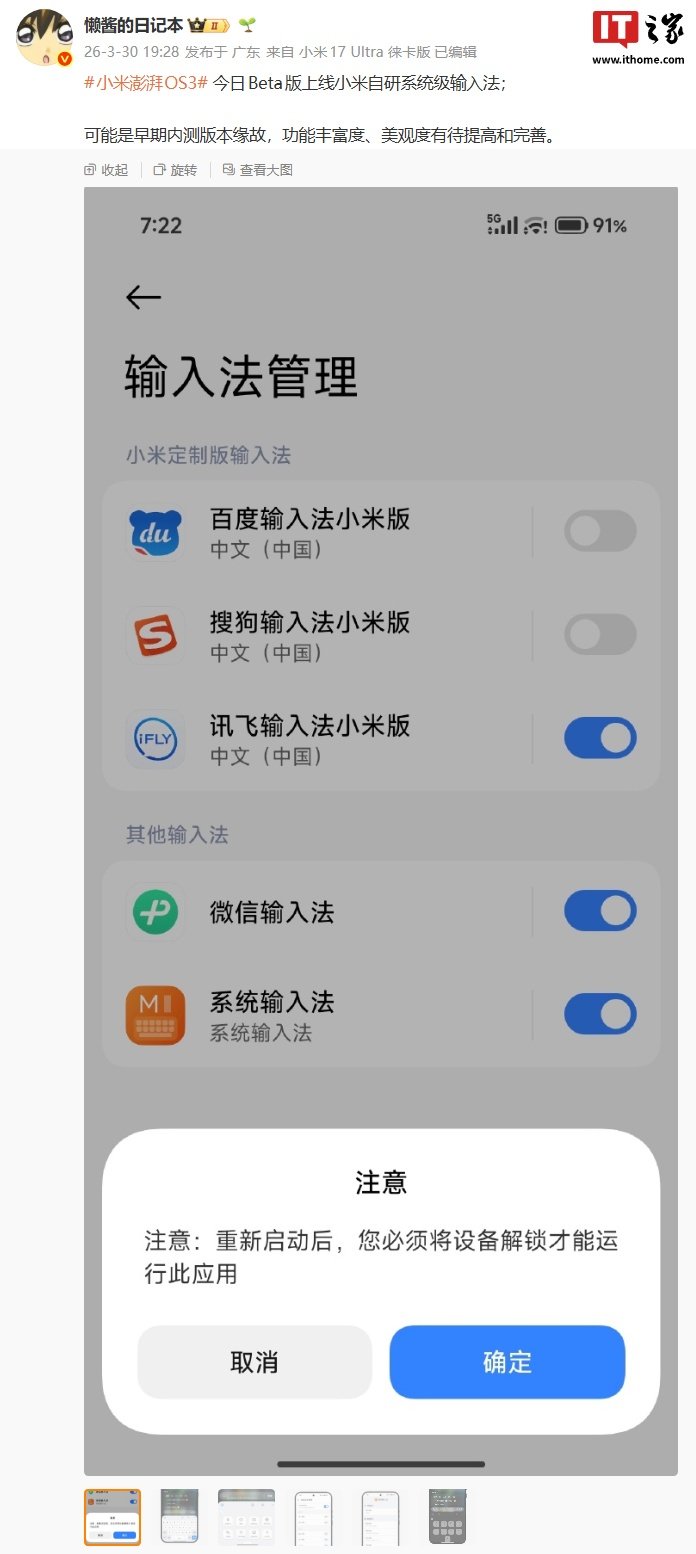
A new Xiaomi HyperOS 3 beta build appears to be introducing one of Xiaomi’s more ambitious software additions so far: an in-house system keyboard. Screens shared today by blogger Lazy Jam’s Notebook suggest the feature is already live in an early beta environment, although it still looks like a work in progress rather than a finished public rollout.
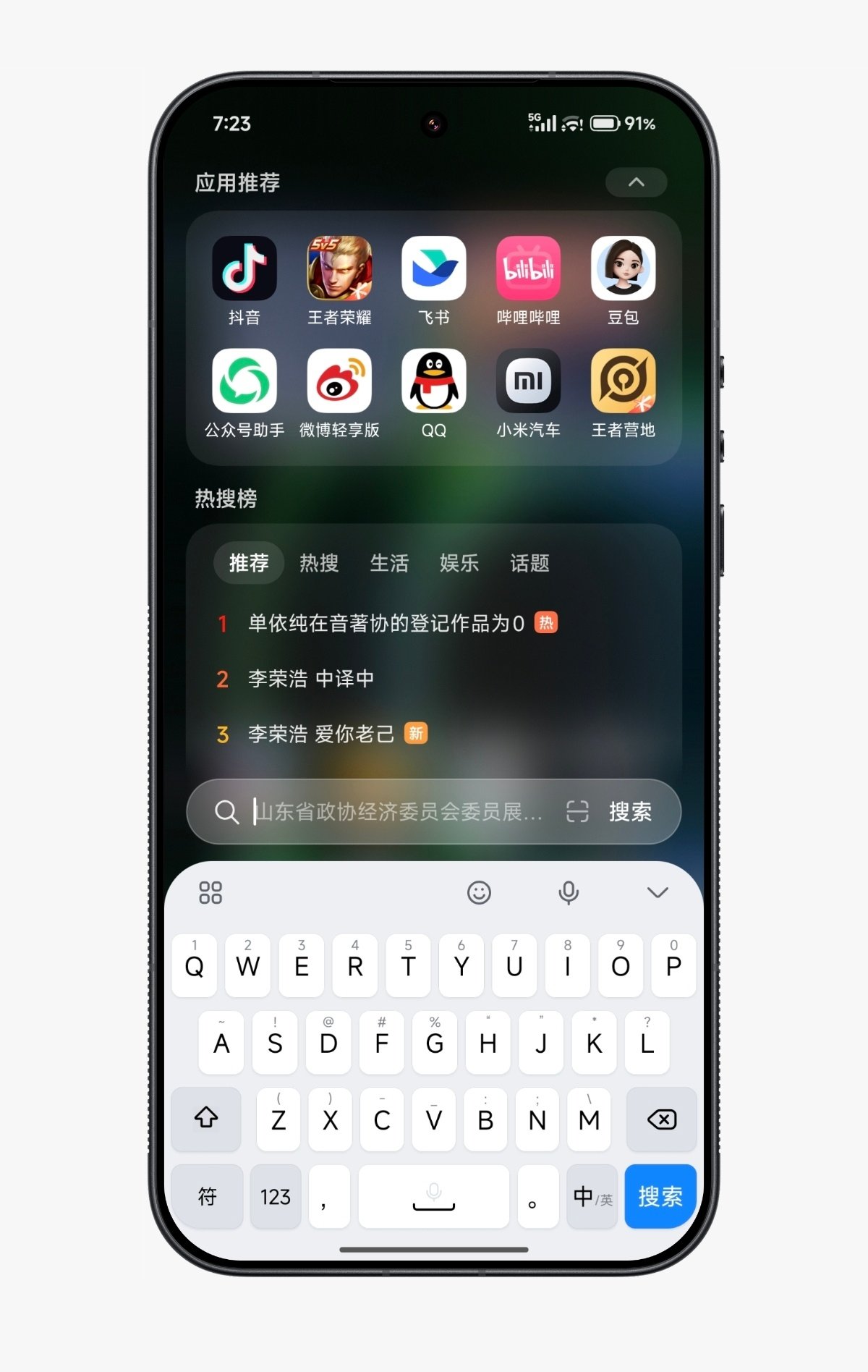
Based on the preview images, the new system keyboard uses a rounded-corner design and already supports standard typing features. Xiaomi has also built in extra tools such as AI chat, AI translation, toolbar management, and keyboard layout adjustment, which makes the keyboard look more like a broader system utility than a simple text input panel.
One visual option that stands out is an advanced material effect for the keyboard background. The beta version includes a switch for a frosted, blurred backdrop, suggesting Xiaomi is also experimenting with more layered interface styling rather than focusing only on raw functionality.
The source notes that this is likely still an early internal test version, which may explain why the feature set and overall polish do not yet look complete. In other words, the core direction is visible, but Xiaomi may still have a fair amount of refinement ahead before this becomes a stable user-facing feature.
The timing is also interesting because Xiaomi’s official HyperOS account separately announced a new password app earlier today. According to Xiaomi, that app can automatically capture and save credentials during first-time sign-ins, support one-tap autofill, and let users manually add passwords for apps that are already logged in. It can also remind users when a password changes and allows manual updates inside the password details page.
Taken together, the two additions suggest Xiaomi is continuing to push Xiaomi HyperOS 3 toward deeper first-party system tools. The keyboard itself still appears unfinished, but the mix of typing, AI, and interface customization hints at the kind of tightly integrated software experience Xiaomi may be aiming to build across the platform.