Earlier this month, NASA’s Artemis 2 mission sent four astronauts into lunar orbit and used a new optical link to send dramatic imagery back to Earth, giving the agency another real-world demonstration of how laser communications could reshape deep-space data transfer.
What makes this report stand out is that one of the receiving systems was not run by NASA itself. Instead, a lower-cost ground terminal developed by Observable Space and Quantum Opus, and operated by the Australian National University, reportedly received spacecraft data from lunar orbit at 260 Mbps.
According to the companies involved, that result shows high-speed space-to-Earth communications do not always require the kind of custom ground infrastructure that traditionally drives costs into the tens of millions of dollars. The experimental terminal used in this test was said to cost less than $5 million.
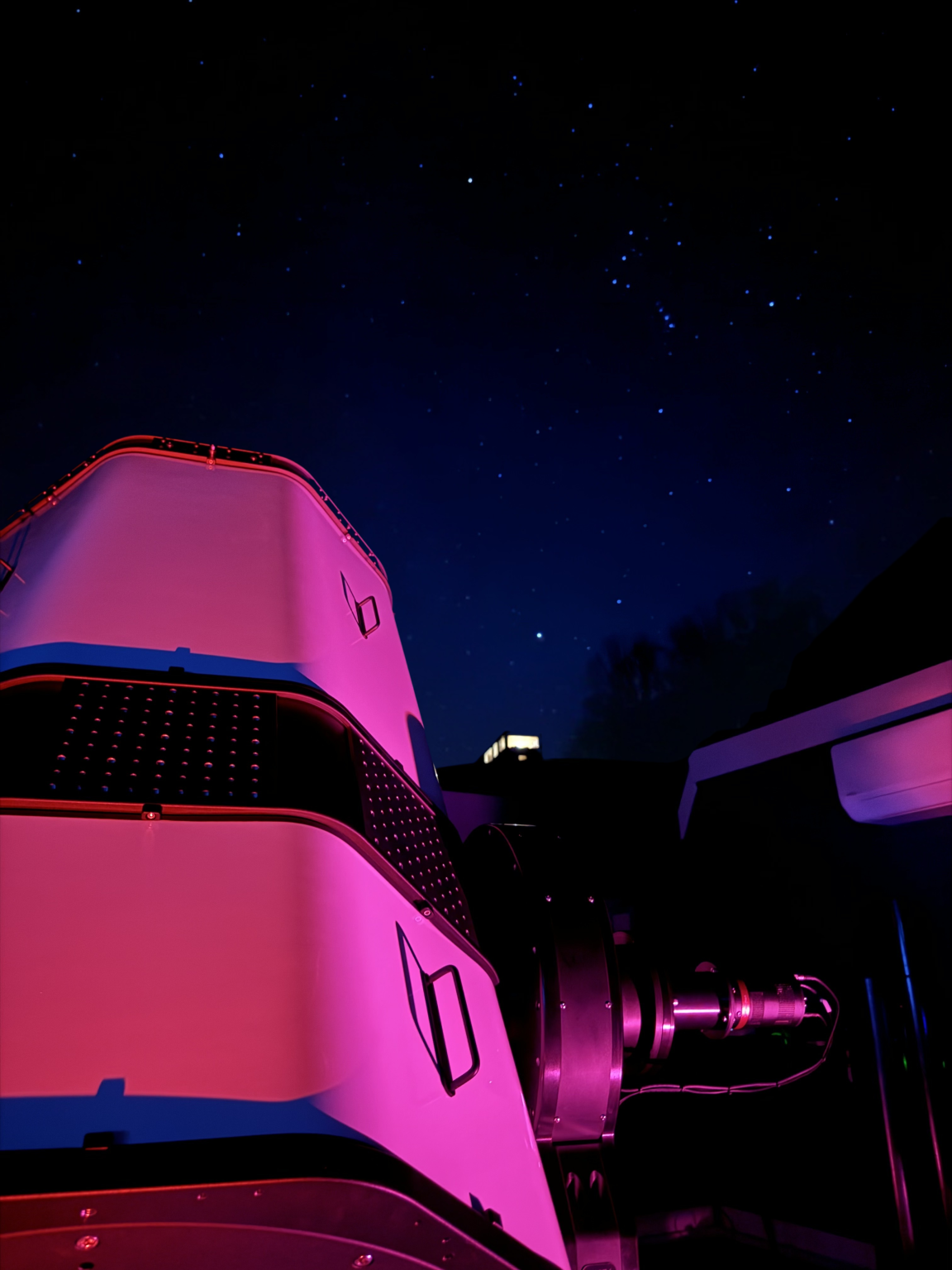
The setup worked by using Observable Space software and telescope systems to acquire and lock onto signals from the Orion spacecraft, while a photon sensor built by Quantum Opus handled the decoding side. In plain terms, the test combined precision tracking with a sensitive optical receiver to pull useful data out of a laser downlink from deep space.
NASA has been exploring deep-space optical links for years, including a previous demonstration that established a data connection with a spacecraft headed toward an asteroid from roughly 218 million miles away. But the Artemis 2 mission appears to have been one of the most complete validations so far, with NASA receiving stations in California and New Mexico, along with the Australian experimental terminal, all successfully receiving 4K footage captured during the crew’s flight around the Moon.
The report also explains why station placement matters so much. While laser communications can move data much faster than the radio-frequency systems still common in space operations, optical links are more vulnerable to cloud cover and require clear line-of-sight contact with the target. That is a big reason a receiver in Australia proved valuable during the mission.
Quantum Opus co-founder and former astronaut Josh Cassada said Australia was the first continent visible in the first Earthrise image taken by the Artemis 2 crew, which adds a fitting geographic detail to the role that station played in the communications test.
Observable Space CEO Dan Lehr said the mission suggests optical downlink technology is now reaching the point where broader deployment is realistic. He noted that laser links are already widely used for satellite-to-satellite communications, but cost has long limited their use in sending data back to Earth. The company now plans to keep pushing toward a larger global network of terminals capable of receiving data from many kinds of spacecraft and satellites.
Lehr told TechCrunch that scaling efforts will continue over the next year and likely beyond, though he did not fully detail the company’s broader strategy. Even so, the takeaway is pretty clear: lower-cost optical ground stations may be moving from experimental concept to practical infrastructure.