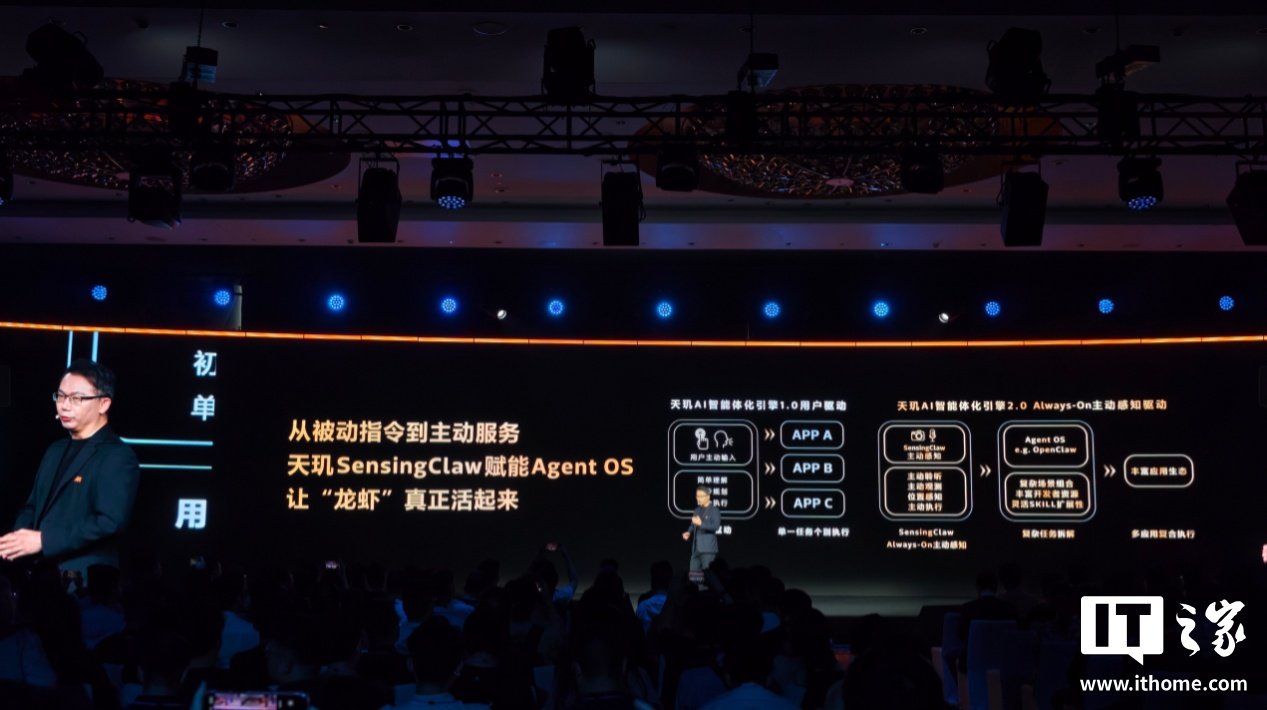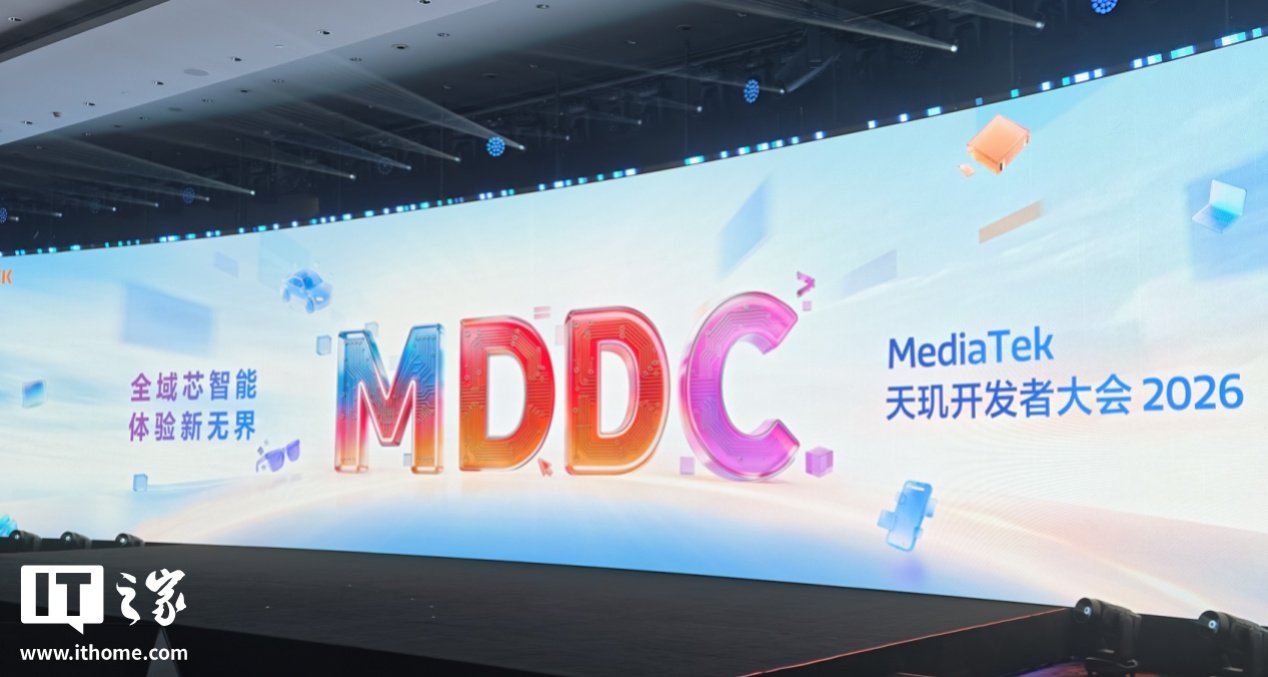
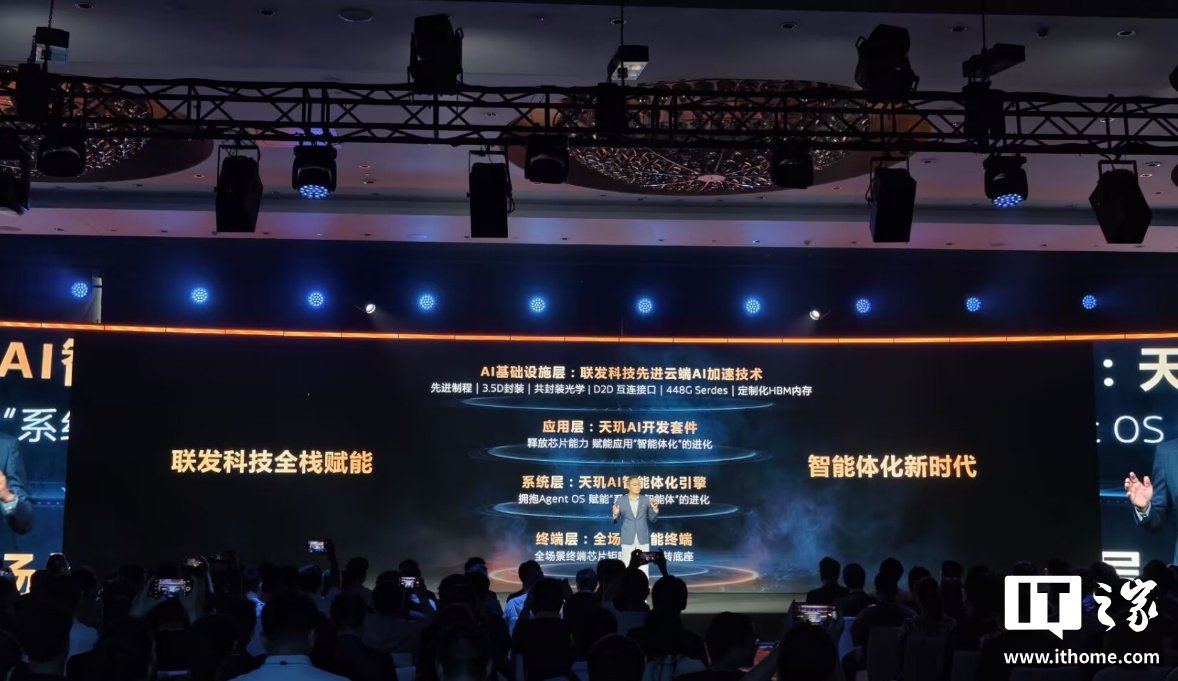
At its Dimensity Developer Conference 2026 in Shanghai, MediaTek AI agents took center stage as the company introduced the Dimensity Agentic AI Engine 2.0, an upgraded Dimensity AI Development Kit 3.0, and new system-level Claw integrations built with partners including OPPO, Xiaomi, and Transsion.
After the keynote, MediaTek executives expanded on that roadmap in a media interview attended by IT Home. A major topic was how the company plans to make cross-device AI work more smoothly across phones, cars, tablets, glasses, and edge devices without running into the usual problems of latency, uneven compute scheduling, and ecosystem fragmentation.
MediaTek said its answer starts at three layers. The first is the IP layer. Executives said reuse is being considered from the earliest stage of chip design, with a more unified NPU hardware and software standard that can scale from smartphones to automotive systems with different power and compute budgets. The idea is to lower the cost of moving the same core AI capabilities across product lines.
The second layer is software. MediaTek pointed to its NeuroPilot platform as the common development foundation. In practical terms, the company said an application built and tuned for a Dimensity phone should be much easier to port to other terminals such as tablets or in-car systems, making the pitch closer to develop once and deploy across multiple devices.
The third and hardest layer is ecosystem interoperability. MediaTek openly acknowledged that different device categories still operate under very different platform rules. Executives argued that large language models may help reduce that friction by giving products a more unified natural-language instruction layer. They also referenced the recently popular “Lobster” framework as an example of how cross-system command exchange can begin to break old compatibility barriers.
Beyond the high-level architecture, MediaTek described different collaboration models for different devices. AI glasses, for example, may focus more on sensing while handing heavier processing back to the phone. Cars and phones, meanwhile, are more likely to share context, habits, routes, and media preferences so the in-car system can respond in a more personalized way once a user gets behind the wheel.
Another part of the interview focused on the shift from software-defined vehicles to AI-defined cars. MediaTek said safety-critical functions such as assisted driving and vehicle control still require full validation and cannot simply move at consumer-electronics speed because AI has been added to the stack. Cabin assistants are different: they are less tightly tied to driving safety and can advance faster in areas like trip planning, information lookup, and entertainment control, which may indirectly improve safety by reducing distraction.
Executives argued that one of MediaTek’s biggest advantages in automotive AI comes from the phone industry itself. Smartphone platforms are updated quickly and push constant advances in compute, efficiency, and memory bandwidth. MediaTek said those gains can be carried into automotive products, citing the 400TOPS compute capability of its flagship CX-1 cockpit platform as one example, alongside low-bit compression and memory-optimization techniques first matured on the mobile side.
MediaTek also said the industry’s bottleneck is no longer just raw compute. In many cases, the harder problem is converting available compute into user-visible value. That is why the company is investing in always-on sensing, better system architecture for simultaneous NPU access, and a more complete hardware-to-software stack that includes dual-NPU support, memory technologies designed for agentic workloads, deployment toolchains, and the new Agentic AI Engine 2.0 as a system foundation for device makers.
Memory cost pressure came up as well. MediaTek executives said memory capacity and bandwidth have become central constraints for on-device AI, especially as larger models consume more resources. To respond, the company is pushing a low-bit compression toolkit that it says can improve compression by as much as 58% at the same model quality, while also relying on hardware memory compression and dynamic model loading to reduce pressure on bandwidth and local memory use.
Even so, MediaTek does not view rising memory prices as a reason to stop building local AI features. Instead, it framed the price spike as a push toward more rational product design, where companies draw a clearer boundary between what should run on the device and what should stay in the cloud or at the edge.
On the software side, the company said AI phones are likely to keep developing in two parallel directions. One comes from OS vendors such as Google building upward from the system layer. The other comes from app companies pushing downward from the application layer. MediaTek said it is working with both camps and expects both approaches to remain important.
Executives also said frameworks that separate the orchestration harness from the large model itself are already influencing future chip planning. In that view, a phone may not need to wait for a fully mature local foundation model before offering personal memory, context awareness, or workflow assistance. That expectation is pushing MediaTek to think more carefully about how future Dimensity platforms balance CPU and NPU scheduling for overall energy efficiency.
In short, the company’s message at MDDC 2026 was that agentic AI will not be won by one faster chip alone. It will depend on reusable silicon blocks, shared software infrastructure, and a more cooperative ecosystem that can carry context and intent across multiple types of devices.