
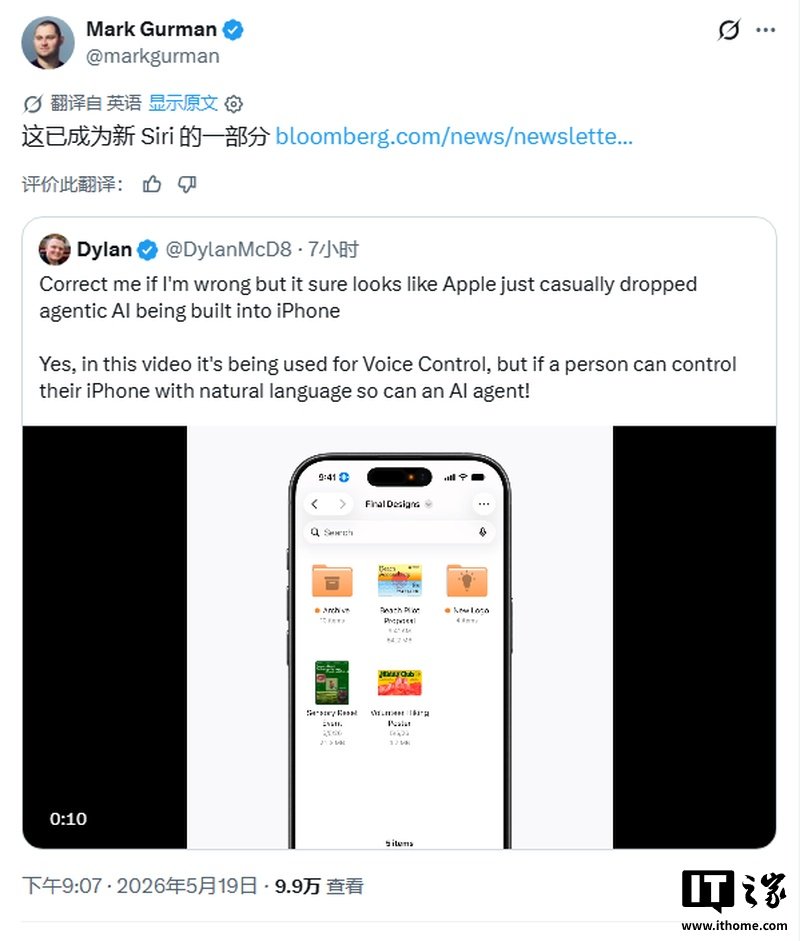
Apple has previewed a new accessibility upgrade coming later this year in iOS 27, iPadOS 27, and macOS 27. The highlight is a smarter version of Voice Control that leans on Apple Intelligence to understand natural language instead of forcing users to memorize exact button names or numbered interface elements.
In practice, that means someone could say things like “open the best restaurant guide” or “tap the purple folder”, and the system would understand which on-screen control they mean. Apple says this “say what you see” approach should make complex interfaces easier to navigate, especially in apps crowded with buttons, menus, and panels.
The update is aimed at accessibility first, but the benefit is broader than that. Natural spoken commands lower the friction of using an iPhone or iPad, particularly for people who have difficulty with precise touch input or who find dense app layouts tiring to manage. It also hints at a more capable layer of system interaction that can interpret what is currently visible on screen.
Bloomberg’s Mark Gurman has also reported that the same underlying agent-style intelligence could feed into the next generation of Siri in iOS 27. If that happens, Siri may move beyond answering questions and begin understanding screen context well enough to carry out actions on a user’s behalf.
Apple is pairing this update with other accessibility changes as well. VoiceOver is getting an image explorer that can describe photos, scanned bills, and personal records in greater detail. Magnifier is being expanded with visual descriptions, spoken Q&A, and commands such as “zoom in” or “turn on the flashlight”. The Accessibility Reader is also being adapted for more complex layouts, including multi-column documents and science articles filled with images and tables.
Apple says these new features will also support summaries on demand and built-in translation while preserving a user’s preferred formatting, fonts, and colors. For users with low vision, dyslexia, or other reading-related needs, that could make the overall experience feel much more continuous instead of breaking the flow every time content becomes harder to parse.