Apple’s next big product moment after WWDC 2026 is expected to be its fall iPhone event. The Pro models have already attracted most of the attention, but the standard iPhone 18 may be the more interesting model for everyday buyers because Apple reportedly has to make a difficult trade-off.
According to a new report from Wccftech and information attributed to industry analyst Schrödinger, Apple is dealing with rising memory costs while planning the iPhone 18 generation. The iPhone 18 Pro Max could face a price increase, while the standard iPhone 18 may be caught between two competing priorities: more memory or a better display panel.
The reported plan is straightforward but awkward. Apple originally wanted to give the standard iPhone 18 12GB of memory, a major upgrade over many current non-Pro models. But memory prices have risen sharply enough that Apple may need to cut cost somewhere else if it keeps that RAM target.
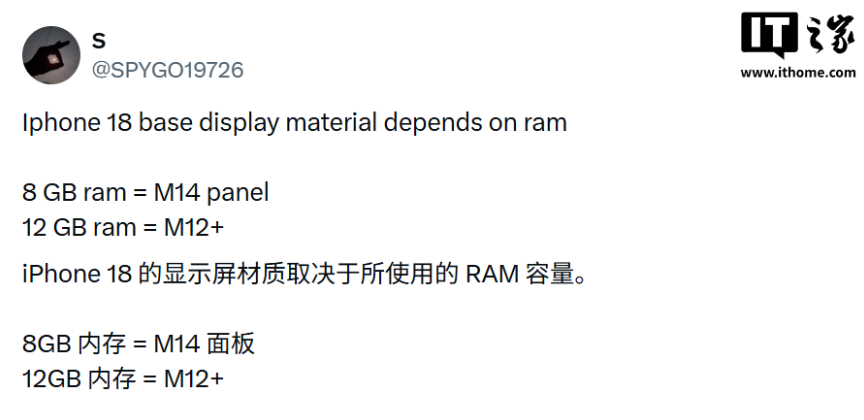
The component that could be affected is the display. Apple is reportedly considering moving the standard iPhone 18 from an M14 panel to an M12+ panel. In plain terms, that means the phone could gain more memory while using an older-generation screen material.
The logic behind that decision is that buyers of the standard iPhone are usually more price-sensitive than Pro buyers. Wccftech’s view is that Apple may see a display-material downgrade as less obvious to consumers than a higher retail price or a lower memory configuration. Schrödinger also suggested that this would not simply be cost-cutting for its own sake, but a way to place resources where Apple believes they matter more.
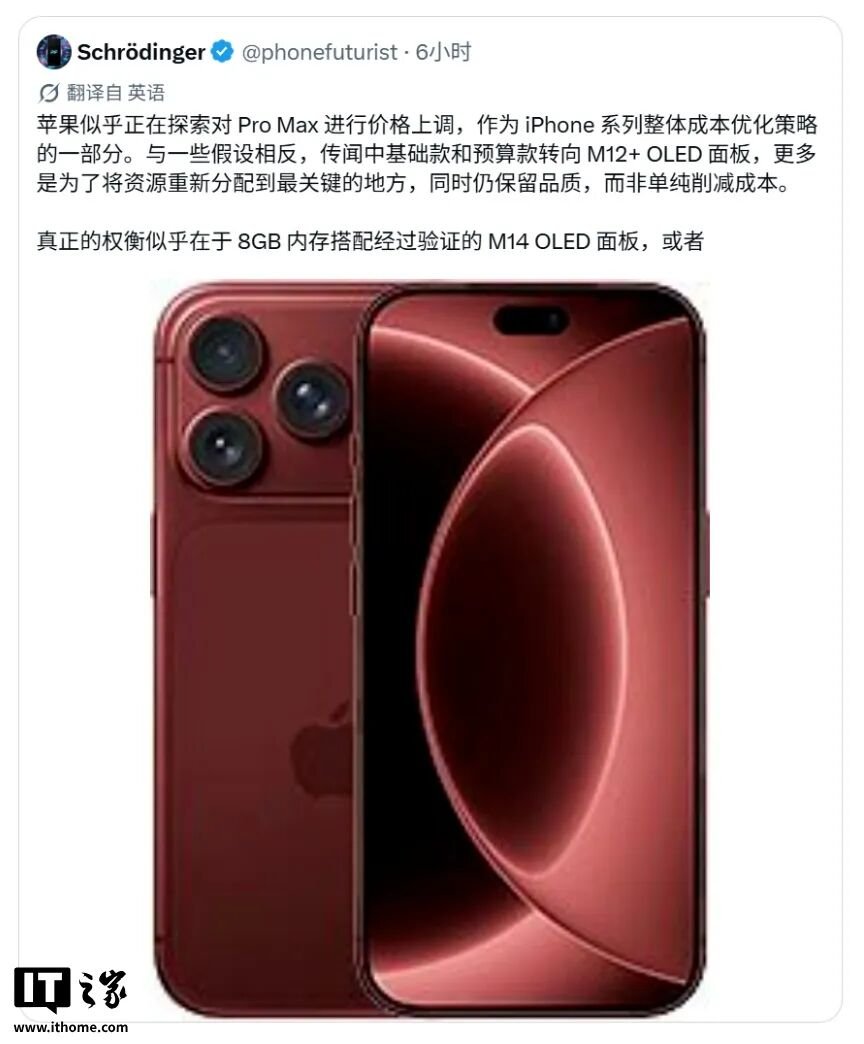
If the rumor is accurate, the final decision may come down to two possible configurations: 12GB of RAM with an M12+ display, or 8GB of RAM with a newer M14 display. Apple has not confirmed either option, and the final hardware choice may still change before launch.
The 12GB memory upgrade has been discussed for some time. Korean media reported as early as last October that Apple had asked Samsung to increase 12GB memory supply for the iPhone 18 series, and later leaks repeated similar claims. The display concern also did not appear out of nowhere. Earlier rumors had already suggested Apple might use M12+ material, though some reports framed it as a way to leave more room between the standard model and the Pro line.
M12+ is not a bad panel material, but it is no longer new. It is a refined version of Samsung’s M12 material and was used in devices such as the iPhone 14 Pro and Galaxy S23. Compared with M14, it is generally considered behind in luminous efficiency, peak brightness, and power consumption.
That makes the choice genuinely difficult. A better panel would improve the experience every time the screen is on. More memory, however, may shape how long the phone feels modern, especially as Apple leans harder into on-device AI.
The arrival of Siri AI in iOS 27 changes the value of memory. Apple’s newer AI features reportedly draw a clear line between devices with 8GB and devices with 12GB. Two specific Siri AI capabilities are said to require 12GB RAM: a new language experience and higher-accuracy system-wide dictation.
The new language experience can make Siri’s voice more customizable, expressive, and flexible in speed. The improved dictation engine is meant to better capture spoken words, spelling, punctuation, and capitalization. These are not just cosmetic upgrades; they affect how useful voice interaction feels in daily use.
Apple has emphasized that its most powerful on-device models and certain advanced features, including more expressive speech and more advanced dictation, are only supported on devices such as the iPhone Air and iPhone 17 Pro series. In practice, that means 12GB memory may become a gatekeeper for the fullest version of Apple’s AI experience.
Devices with 8GB of memory are not necessarily excluded from Siri AI altogether. Current iPhone 17-class hardware can still use features such as personalized context awareness, screen awareness, web answer retrieval, standalone Siri interactions, visual intelligence, and writing tools after upgrading to iOS 27. But compared with 12GB devices, they may continue using older voice technology and a less accurate dictation engine.
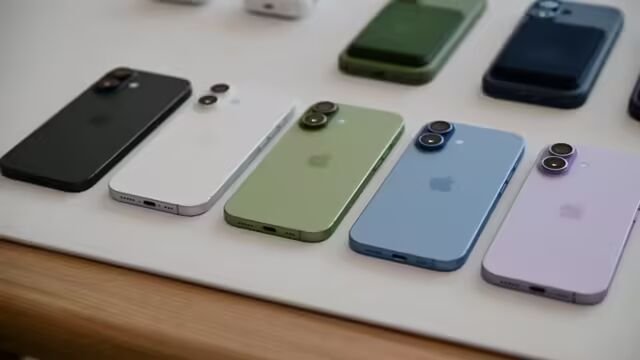
That is why many users outside China appear to prefer the memory upgrade. They do not want to buy a new standard iPhone and immediately feel that a portion of the AI experience is reserved for higher-memory models. For buyers in markets where Apple Intelligence and Siri AI roll out fully, 12GB RAM could matter more than a panel-material difference that many users may not notice directly.
The situation may feel different in China and other regions where Apple’s AI rollout is uncertain or delayed. If the full Siri AI feature set is not available, buyers may care less about the 12GB requirement and more about screen quality, battery life, and price.
Other reported iPhone 18 details are more conventional. The standard model is expected to keep a similar design, including a 6.27-inch LTPO 120Hz Dynamic Island display. The chip should move to Apple’s A20, built on TSMC’s 2nm process and using WMCM packaging to integrate CPU, GPU, and other modules in one package.
The modem may also change. Reports suggest Apple will use its own C2 baseband chip, still built on TSMC’s N4 process, but with support for both mmWave and sub-6GHz 5G. If true, that would be Apple’s first self-developed modem to cover both major 5G frequency categories.
The camera system is expected to remain a dual-camera setup, but supplier changes are possible. Apple could break Sony’s exclusive hold on some image sensors by adding Samsung CMOS sensors, including a reported three-layer stacked sensor design.
The launch schedule may be just as important as the hardware. Apple is widely expected to change its iPhone release strategy this year. The fall event may focus on the Pro models and Apple’s first foldable iPhone, while the standard iPhone 18 could be delayed until the following spring and launch alongside the iPhone 18e.
Analyst Ming-Chi Kuo has argued that the new timing would help Apple fill a marketing gap in the first half of the year, when many Android rivals launch flagship phones. It would also reduce the risk of too many iPhone models competing for attention at the same event.
For consumers interested in the standard model, that means a longer wait than usual. But from Apple’s perspective, delaying the standard iPhone could make sense, especially after the strong performance of the iPhone 17 and the current pressure from memory pricing.
The biggest unknown remains the same: whether Apple chooses the RAM upgrade or the newer display material. A downgrade in screen technology would disappoint some buyers, but if it allows the standard iPhone 18 to ship with 12GB memory and stronger Siri AI support, Apple may decide that the trade-off is worth it.