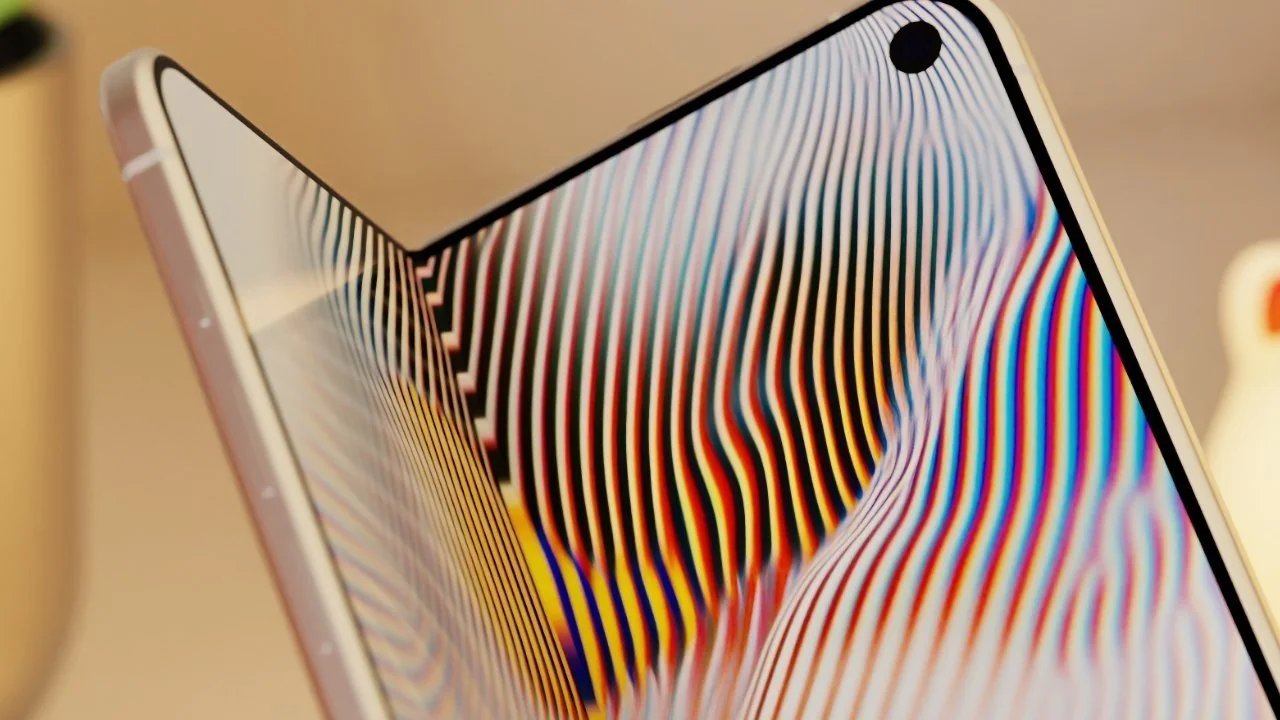
A new Counterpoint Research report argues that book-style foldable phones are moving beyond the simple idea of “a phone with a bigger screen.” As AI becomes more deeply woven into mobile operating systems, Counterpoint believes larger foldable screens could become one of the best places for complex AI workflows to happen.
The firm says mobile AI is shifting from isolated features into a system-level interaction layer. Instead of asking one question and receiving one answer, users increasingly expect an assistant to handle multi-step tasks across different apps. That change makes the display itself more important, because people need to see source information, AI-generated results, and the next action at the same time.
On a conventional smartphone, that kind of workflow often means jumping between apps, copying text, comparing results, and constantly returning to the previous screen. Counterpoint’s point is that a book-style foldable can keep more of the process visible. The larger inner display gives users room to run split-screen apps, open floating windows, compare documents, and check an AI response without losing the original context.
In Counterpoint’s view, AI does not necessarily create demand for foldables by itself. Instead, AI makes the value of a larger foldable screen much clearer. The phone becomes less of a novelty device and more of a portable workspace where complex tasks can remain visible from start to finish.
The report describes the big foldable screen as a kind of “workflow canvas.” That phrase matters because it shows how the category is being repositioned. A book-style foldable is not just meant for watching videos or reading web pages. It can also support more serious productivity work, including document editing, information sorting, AI-assisted writing, research, and multi-app task handling.
Counterpoint also separates different types of book-style foldables. Traditional book-style models focus on balancing productivity and portability. Their inner screens, split-window tools, and multitasking features make them better suited to handling documents, organizing information, and working with AI assistants. Wider foldables, meanwhile, lean more toward media and content consumption, with a display shape that feels closer to a small tablet.
That distinction is useful for buyers because it suggests foldables are no longer a single category with one obvious use case. Some models are designed around mobile productivity, while others are better for immersive reading, browsing, video playback, and document previewing. Neither approach is automatically better; they simply serve different habits.
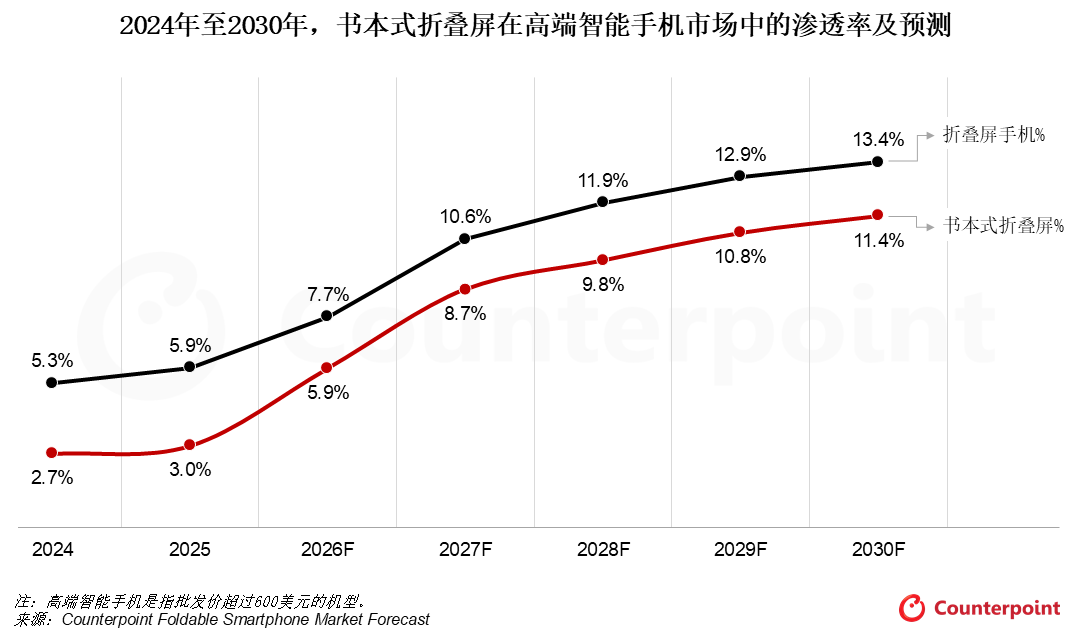
The market forecast is also notable. According to Counterpoint, book-style foldables accounted for about 2.7% of the premium smartphone market in 2024. By 2030, the firm expects that share to reach 11.4%, more than quadrupling over the period.
That growth forecast depends on several factors: thinner hardware, better hinge durability, stronger software support, improved app layouts, and more AI tasks that actually benefit from a larger screen. If those pieces continue to improve together, foldables could become a more convincing option for premium buyers who want more than a regular slab phone.
For U.S. readers, the bigger takeaway is not just the foldable market share number. It is the direction of phone design. As mobile AI becomes more practical, the screen may become a more important part of the AI experience. A small display can answer a question, but a larger foldable display can help users compare, verify, edit, and act on that answer in one place.
That is why book-style foldable phones may become more relevant in the AI era. They give AI features a larger, more flexible surface to work with, and they make complex mobile tasks feel less cramped than they do on a standard phone.