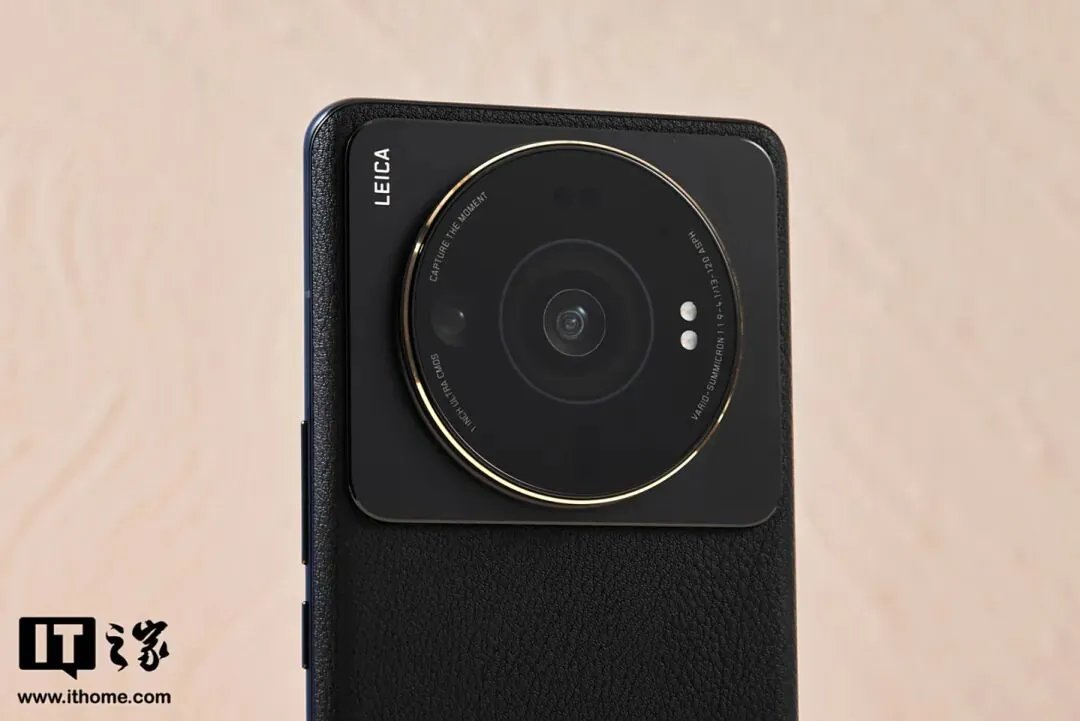
The smartphone camera race is shifting again. A few years ago, flagship phones were obsessed with one-inch sensors and ever-larger camera hardware. More recently, though, that conversation has started moving toward a different technology: LOFIC camera sensors.
LOFIC has only been appearing in consumer phones for roughly two years, but it has already become a major talking point for brands such as Honor, Huawei, and Xiaomi. Current signs suggest that the next generation of Chinese flagship phones will compete heavily around LOFIC, while international players including Sony, Samsung, and Apple are also watching the same direction closely.
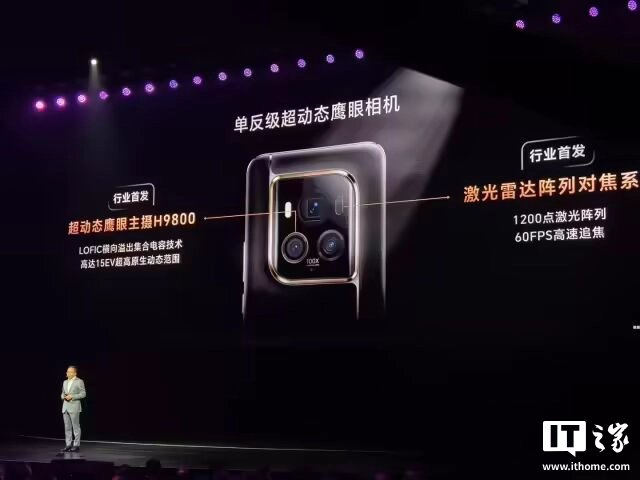
Honor was the first major smartphone brand to bring LOFIC sensor technology to market. On March 18, 2024, the Honor Magic6 Ultimate Edition and Honor Magic6 RSR Porsche Design launched with the H9800 “Eagle Eye” main camera, introducing LOFIC to the industry. At the time, Honor said the sensor reached an industry-leading 15EV dynamic range and improved dynamic-range performance by up to 600%. Higher-end Magic7 and Magic8 models later continued using LOFIC-based main cameras.
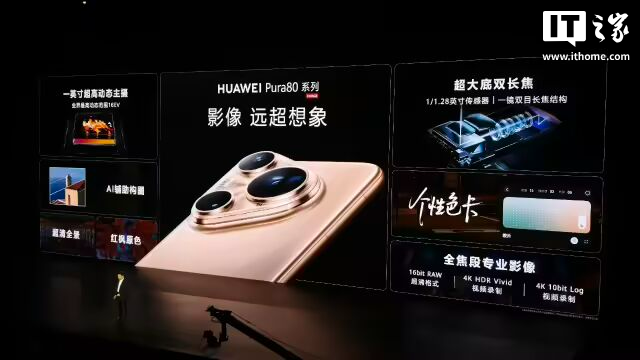
Huawei and Xiaomi followed quickly. Huawei’s Pura 80 Ultra stands out because of its one-inch-class LOFIC main camera, which is described as offering a 16EV dynamic range and extremely high light intake. Xiaomi, meanwhile, promoted the Xiaomi 17 Ultra with the slogan “No LOFIC, no Ultra.” Its Light Hunter 1050L sensor supports third-generation LOFIC technology, improving both photo and video dynamic range.
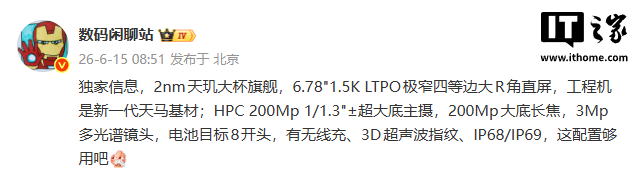
Leaks suggest the technology could spread much more widely this year. Xiaomi is expected to keep LOFIC on the 18 Ultra and may bring it down to the 18 Pro Max, reportedly using a new 200-megapixel 1/1.28-inch sensor with LOFIC HDR 3.0. Vivo is also rumored to be testing a Sony 50-megapixel 1/1.28-inch main sensor with LOFIC on an engineering sample of the X500 Pro Max. There are even claims that some manufacturers are testing LOFIC on telephoto cameras, which could eventually lead to phones with dual LOFIC imaging systems.
The supply chain is moving too. SmartSens has been pushing LOFIC-ready sensors aggressively, with parts such as the SCC90XS and later SC596XS, SC570XS, and SC540XS all reportedly supporting the technology. If those reports hold, this year could become the first broad adoption cycle for LOFIC across Chinese flagship phones.
So what exactly is LOFIC? The full name is Lateral Overflow Integration Capacitor, which roughly means a lateral overflow integrated capacitor. The concept originated in automotive camera systems before making its way into premium phone cameras. Its goal is simple: improve dynamic range, especially in difficult scenes such as backlit portraits, night shots, and high-contrast environments where bright areas can blow out while shadows lose detail.
Technically, LOFIC adds a high-density capacitor beside the photodiode inside each pixel. You can think of it as a two-bucket system. In a conventional sensor, once a pixel is “full” of light information, extra photoelectrons overflow and are lost, which causes blown highlights and missing detail. With LOFIC, the excess charge can flow into an additional capacitor instead of being discarded. During image processing, data from both storage areas is combined to produce a frame with more complete highlight and shadow information.
The benefit is especially important for smartphone cameras because phones have limited optical space and rely heavily on computational photography. LOFIC can help preserve highlight detail without depending as much on multi-frame HDR stacking, which can sometimes cause ghosting, smearing, or motion artifacts when people, cars, or lights are moving through the scene.
That does not mean LOFIC is easy. There are two major challenges. First, integrating a large capacitor into tiny pixels requires advanced manufacturing, which raises complexity and cost. That is one reason the technology has mainly appeared on larger, premium sensors so far. Second, the extra capacitance and additional data handling can introduce more electrical noise and increase power consumption, so final image quality still depends heavily on each brand’s sensor tuning and image-processing algorithms.
Outside China, Sony, Samsung, and Apple are also being linked to LOFIC. A previous leak about Sony’s LYT-838 described it as a 50-megapixel 1/1.28-inch sensor and Sony’s first LOFIC-capable model. Samsung is rumored to be working on a 200-megapixel 1/1.12-inch HPA sensor with ultra-high dynamic range LOFIC technology, while another claim suggests the Galaxy S27 Ultra may use a related HP6 self-use version at roughly 1/1.3 inches.
Apple is reportedly exploring the same field as well. A Wccftech report citing anonymous sources claimed that Apple is testing its first in-house CMOS image sensor using LOFIC technology. The sensor is said to target a dynamic range of up to 20 stops, compared with the roughly 12- to 14-stop range usually associated with current iPhone cameras. If Apple reaches that target, future iPhones could capture complex lighting with less reliance on stacked HDR processing and less visible smearing.
Based on current timing, the earliest likely iPhone candidate for a self-developed LOFIC-style sensor would be Apple’s 20th-anniversary iPhone in 2027. Whether that happens or not, the direction of travel is already visible: LOFIC camera sensors are becoming a global imaging trend, not just a domestic Chinese flagship feature.
In short, smartphone photography is moving from the old “bigger sensor wins” battle toward a new fight over dynamic range, sensor architecture, and image-processing quality. LOFIC will not automatically make every camera great, but it gives phone makers a powerful new tool for preserving real-world light and detail. For flagship phones, that may be the next big camera war.