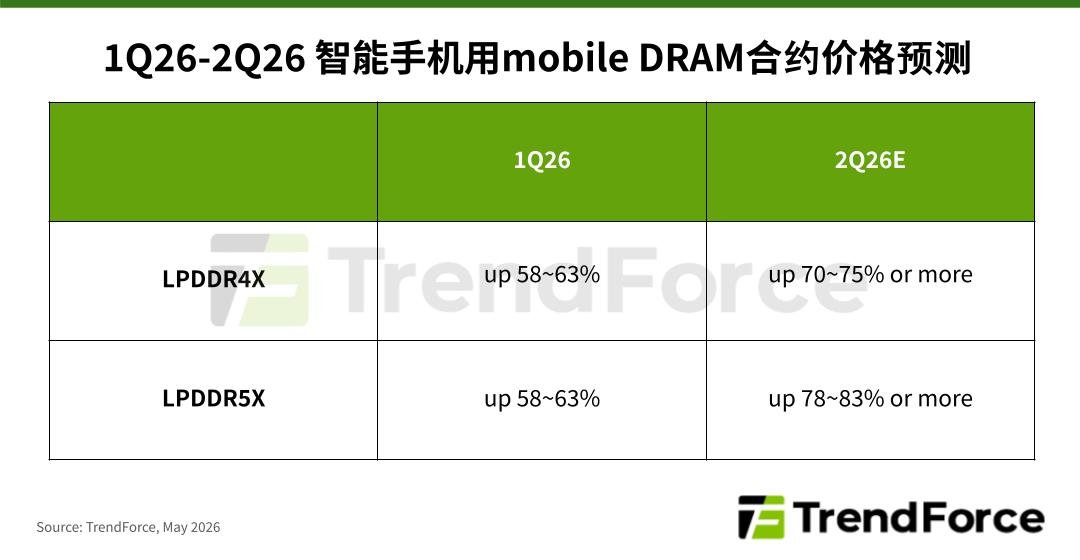
A new forecast from TrendForce points to a sharp new round of price pressure in the smartphone supply chain. The research firm says contract prices for the main categories of mobile DRAM are expected to rise by more than 70% quarter over quarter in the second quarter of 2026.
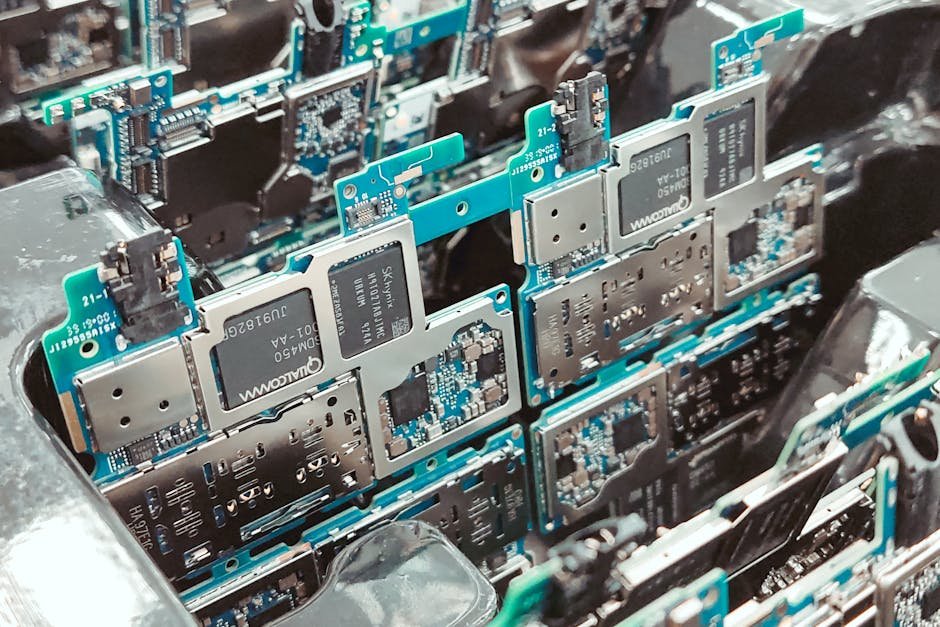
According to the firm’s latest survey, LPDDR4X pricing is expected to climb by roughly 70% to 75% or even more, while LPDDR5X could rise by about 78% to 83% or higher. Those are unusually steep jumps for core memory components and would likely ripple quickly through handset planning and bill-of-material decisions.
TrendForce believes the surge in memory prices will reshape smartphone memory configurations across multiple price bands. In its view, premium phones will increasingly center on 12GB of RAM while 16GB variants become less common. Mid-range models are expected to swing back toward 8GB, and entry-level devices could fall to 4GB configurations.
Even so, the firm doesn’t expect average smartphone memory capacity to shrink overall. Because lower-memory devices are gradually being phased out, average DRAM capacity per smartphone is still projected to increase by 10% this year, reaching 8.5GB.
The report argues that high mobile-memory pricing is turning into a new normal, and that this will create long-lasting pressure across the global smartphone industry. That pressure won’t just hit hardware margins. It could also influence how phone makers, software developers, and service platforms decide where computing workloads should live.
As one response, TrendForce suggests the industry may need tighter coordination with app developers to lower memory consumption. Another likely adjustment is shifting some functions away from local processing and toward the cloud, which could help offset the cost burden created by rising mobile DRAM pricing.
In short, this isn’t just a component-pricing story. If TrendForce’s outlook proves accurate, the next wave of phones may reflect these higher memory costs through leaner RAM options, more selective feature planning, and broader software optimization across the Android market.