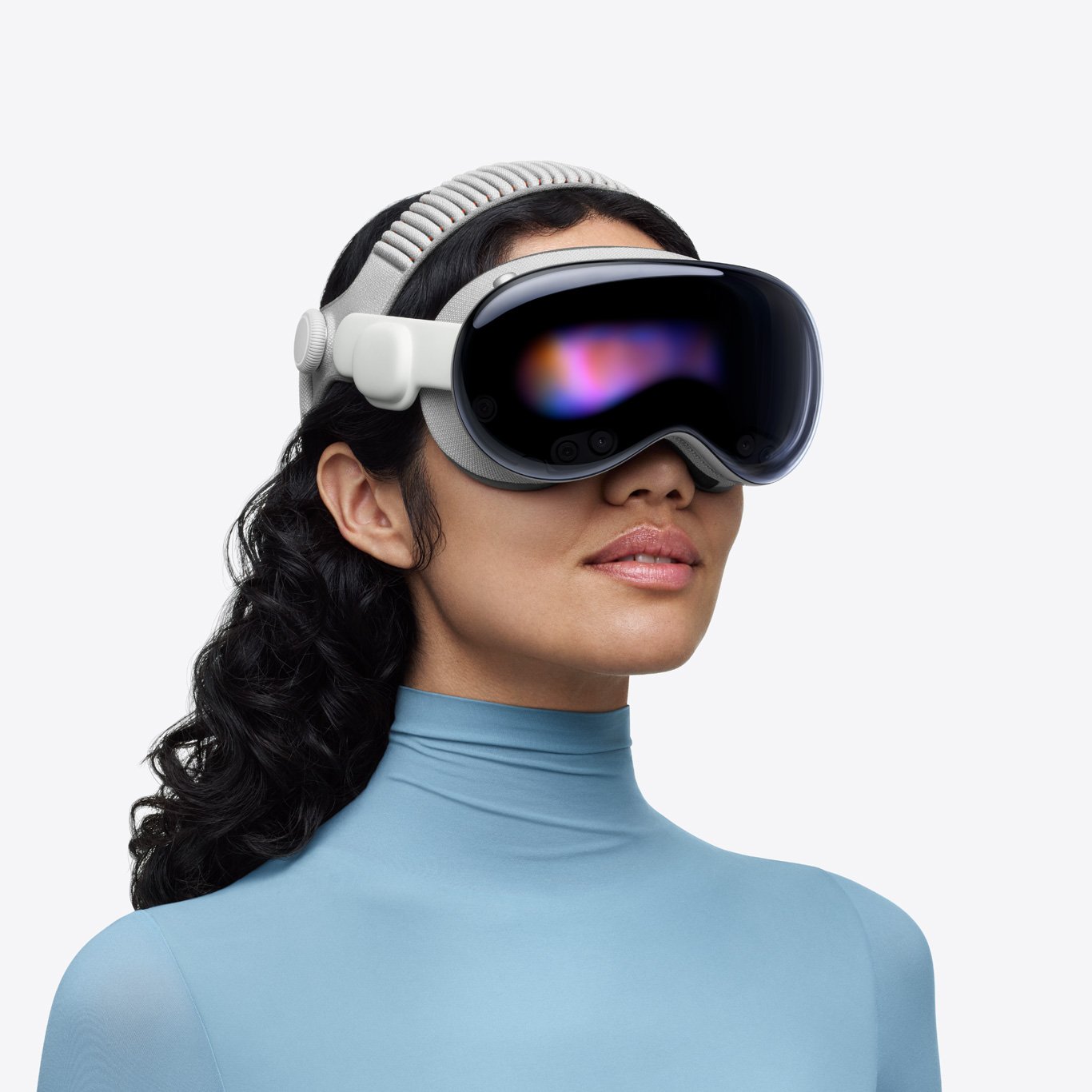
A former longtime Apple employee has shared a blunt account of why Vision Pro struggled at launch, arguing that the headset’s weak debut wasn’t just about price or weight. In her interview with Wired, Megen Leigh said the product arrived with an unusually demanding retail demo process, but Apple stores no longer had the staffing depth or training culture needed to execute that process consistently.
Apple first introduced Vision Pro at WWDC 2023, then started US sales on February 2, 2024. In the weeks leading up to release, the company brought hundreds of retail employees to Apple Park for hands-on training. The secrecy was intense. Staff reportedly signed nondisclosure agreements, had to lock away phones in Faraday bags, and weren’t allowed to describe the experience even to coworkers who had not yet attended training.
Leigh said the headset itself felt incredible during that early training. But once experienced staff returned to their stores, the real challenge began. They were expected to run several more hours of internal instruction, memorize a tightly scripted demo flow, and prepare coworkers to guide first-time customers through a product that relied on eye tracking, hand gestures, a careful face scan, and the correct choice from 25 different light seal sizes.
On paper, that launch plan sounded polished. In practice, many stores couldn’t carry it out cleanly. Employees told Wired that the sales process was too detailed, too easy to derail, and too dependent on staff having enough time to rehearse. Some workers said they got only a fraction of the planned training before being pushed onto the floor. One Chicago Apple Store employee said they watched about 20 minutes of demo material, spent roughly half an hour reading the script, practiced once with a colleague, and then were effectively live.
That mismatch between product complexity and store readiness appears to be at the center of the problem. Customers had to be fitted correctly before the demo could even begin, and the headset’s controls were not immediately intuitive for many people. At the same time, the demo itself reportedly came with more than ten pages of scripted guidance. In a busy retail setting filled with noise, foot traffic, and bystanders watching, the experience could become messy fast.
Leigh and other employees also tied the rough launch to broader changes inside Apple’s retail organization during the Tim Cook era. Under Steve Jobs, Apple Stores were known for deeper staffing, more face-to-face instruction, and a stronger emphasis on teaching customers how to use products. Over time, according to the report, stores became leaner, training shifted more toward self-guided computer modules, and turnover increased. Workers said that by the time Vision Pro arrived, many people on the floor were newer employees with limited launch experience.
The article argues that this wasn’t just a headset story. It reflected a wider shift in what Apple retail had become. Stores were said to be more focused on sales metrics, accessory attachment, and services such as AppleCare+ than on the older model of high-touch product education. Even roles once designed around one-on-one creative coaching had already been reshaped years earlier.
Meanwhile, the hardware itself still faced real obstacles. Employees and customers pointed to the headset’s roughly 1.5-pound weight, limited app ecosystem, awkward Persona video calling experience, and very high cost. The base version started at $3,500, and adding common accessories could push the real out-the-door cost closer to $4,000. So even a flawless store rollout would’ve had a hard job. A messy one made things worse.
By the end of 2024, Vision Pro sales were reportedly under 500,000 units, far below the scale Apple had reached with products like Apple Watch or iPhone. Former store employees described launch-day demos as inconsistent, sometimes chaotic, and often ineffective at converting curiosity into purchases. Some said their stores went through dozens of demos without a single sale.
Taken together, the account paints Vision Pro as a product that asked too much from a retail system no longer built for that kind of launch. The headset may still matter strategically for Apple, but this report suggests its first release exposed something deeper: a gap between the company’s most ambitious hardware ideas and the way those ideas now reach customers in stores.