A Chinese mobile industry alliance says several major Android phone brands are moving ahead with what it calls a fair runtime memory mechanism, a coordinated effort meant to improve app stability across increasingly complex device environments.
The notice was published on April 21 by the ITGSA Mobile Smart Terminal Ecosystem Alliance, also referred to as the Gold Label Alliance. According to the announcement, council-level members including vivo, Xiaomi, OPPO, and Honor are inviting developers to learn about the initiative and take part in the co-development process.
The group says memory pressure has become one of the biggest reasons Android users run into lag, excess heat, force closes, and background apps getting killed. As apps grow more capable and devices vary more widely, high memory usage doesn’t just affect one app. It can also drag down the smoothness and stability of the whole device.
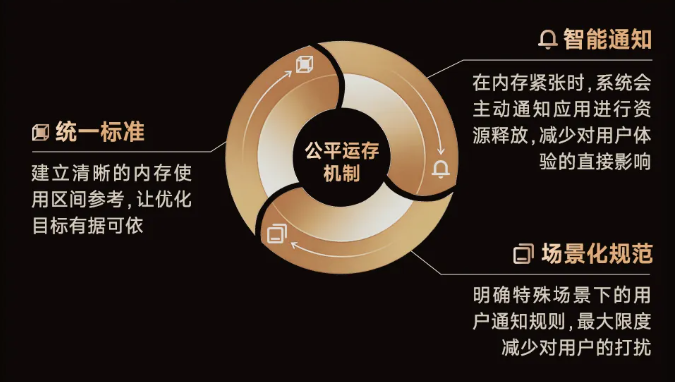
To address that, the alliance is promoting a shared optimization framework designed to lower adaptation costs for developers while giving them a clearer target for memory tuning. The proposal centers on three main pieces:
- Unified standards that define clearer memory-usage ranges, so developers have more concrete optimization goals.
- Smart notifications that let the system proactively tell apps to release resources when memory gets tight, with the goal of reducing direct impact on the user experience.
- Scenario-based rules that spell out how user-facing notifications should behave in special situations, so prompts stay useful without becoming disruptive.
According to the notice, the alliance wants developers to complete evaluation and optimization work for their apps by June 30, 2026. The idea is to make the results available to users sooner and keep the rollout organized across the participating Android ecosystem.
In plain terms, this looks like a cross-vendor attempt to make memory behavior more predictable on Android phones. If developers actually follow through, the end result should be fewer resource-heavy apps slowing devices down, overheating phones, or getting pushed out of memory at the wrong time.