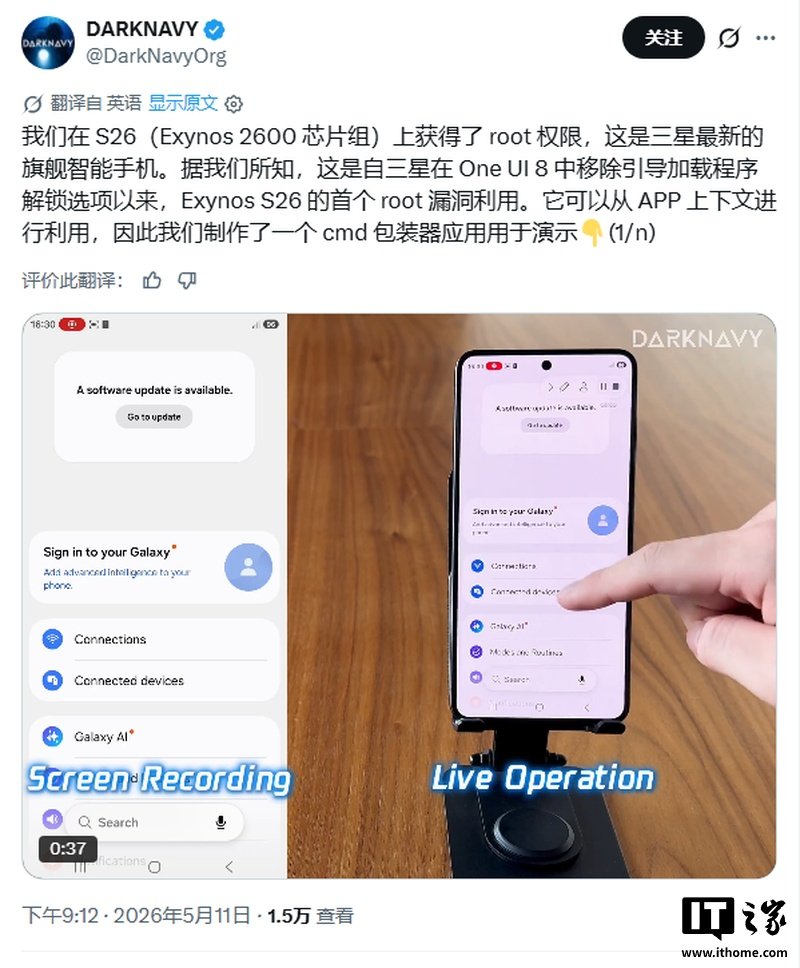
A security team says it has successfully rooted the Galaxy S26 and Galaxy S26+ models powered by Exynos 2600, and it also demonstrated Magisk running on those devices. The claim was shared by DarkNavyOrg on X and later picked up by Android Authority.
That matters because Samsung has tightened control over root access and bootloader unlocking for years, making this kind of result increasingly difficult on recent Galaxy phones. The researchers described the method as a working exploit for the Exynos-based S26 generation after Samsung removed the bootloader unlock option in One UI 8.
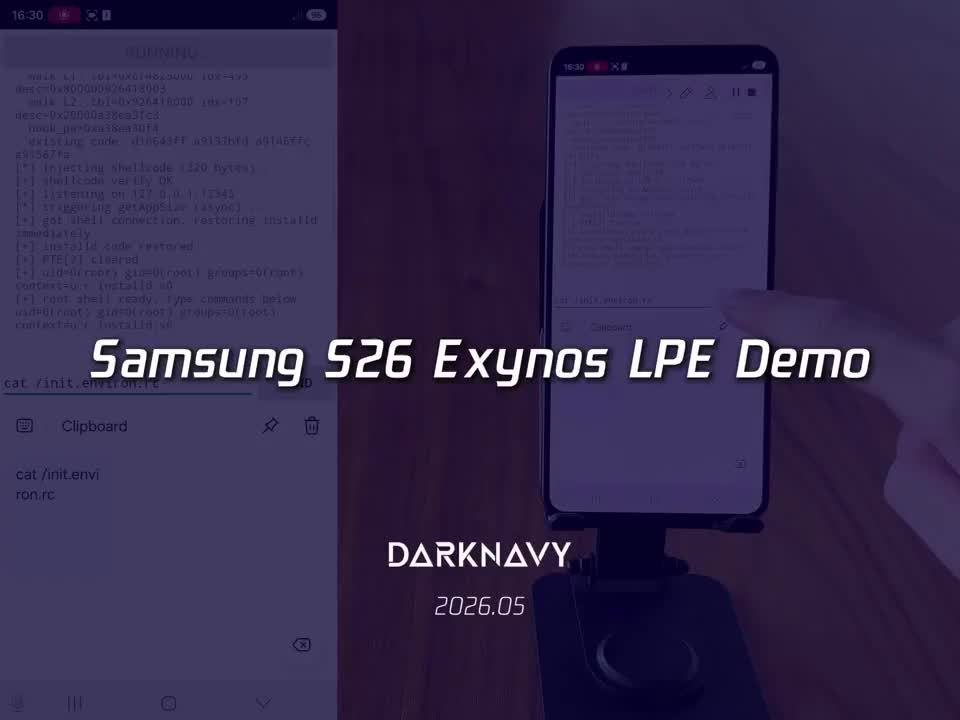
The report says the team used AI-assisted natural-language interaction during the process, though the technical details behind the exploit were not disclosed publicly. A related video reportedly showed that the issue could be triggered through a simple app, after which the researchers were able to get Magisk up and running on the device.
Notably, the Galaxy S26 Ultra is outside the scope of this demonstration because that model uses Qualcomm Snapdragon hardware instead of Exynos 2600. So this is not a blanket root breakthrough for the entire S26 family.
For enthusiasts, root access can still be appealing. It opens the door to deeper system cleanup, aggressive customization, automation tools, and performance experimentation that regular Android permissions don’t allow. That’s the upside many power users care about.
The downside is just as real. Banking apps, enterprise tools, and other security-sensitive services often stop working properly on rooted phones. While Magisk can sometimes reduce compatibility issues, it doesn’t guarantee that every protected app will run normally.
At this stage, the news looks more like a security-research development than something mainstream Galaxy owners can act on right away. The source material does not include the exploit chain, affected build numbers, reproduction difficulty, or a patch timeline, so ordinary users shouldn’t assume this is a simple tweak they can try today.
Even so, it’s a notable reminder that hardening measures on flagship Android phones still get tested constantly by researchers and modding communities, especially when a new Galaxy generation lands.